
Oracles
Dust was at the core when the myriad stars settled a score.
Jayapatri looked up at the firmament in search of a new moon; the waxing crescent wasn’t visible until the moon’s second phase, because the new moon was between the sun and the earth, with the side facing the earth, a sign of no illumination; she struggled to see it as a girl, as an adult, she still yearned for it. Instead, she took a deep breath and sighed; evenings pulled Jaya, her favourite hours, like the tidal moon. She took the time to stand against the sky regardless. This evening, her light chocolate skin radiant in the twilight, a dimming sun on the brink of the ceaseless sky, a departing crow resting on the branch of a camphor tree, filled her with luminescent sorrow.
Crow ogled, but she didn’t engage with it; she had a calm demeanour. Raising her slightly scented, unblemished, silky arms, she yawned, while her sleek, jade, curly hair fell to her slender waist, over which the slanted sun rays stretched across the celestial expanse; a serene smile upon her mouth deepened her dimples. She bowed before the dying sun.
Her calm and her smile both disappeared readily, and a shadow descended on her face. Did Crow, who was not a comfort creature, have any inkling? It heard what she also heard: a trio of hoarse voices speaking to her. The Oracles selected her to be a medium; she trampled over twigs and fallen leaves, the Oracles continued, making her pensive. She asked them with a becoming modesty, and a frown between her arched eyebrows, “Who am I—a fleeting fancy, a speck bound within constricted cosmic sling, teetering on its brink,” they replied. “Destiny wasn’t for humans to harness, but they did believe that they tamed its random unpredictability. Behold the destiny of the kingdom… for you have been blessed with seven hundred years, that’s how long you lived… ” They left her afterwards to grapple with the thousand stars lighting up the forest night.
She shivered in the dusky breeze, the mourning on her face became her like the Greek Electra, she asked herself, "Is it hubris to believe that I wield power over Kings and Kingmakers?" After a pause, "Without my perfumes, would there be a King?" And blushed at her own hubris, the bottlebrush of the bush wavered breezily and dispersed its pollen into the air.
She sneezed and looked at the forest behind her, dense and enigmatic— she saw someone’s brain hanging out of its head, quickly disappearing, she blinked a couple of times before the phantom image went out of sight, her sharp nostrils breathed in musk, envisioned the future of the kingdom, its destiny rolling out, racing her mind—the Oracles prophesied.
Priestess
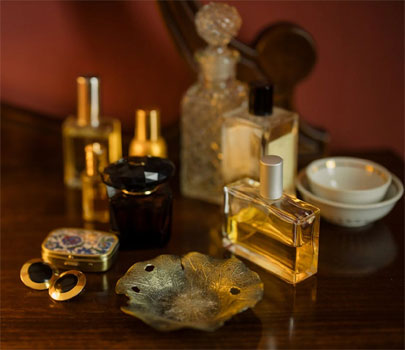
Once employed by a merchant named Prakash, Jayapatri was a priestess of perfumes. She made high-quality perfumes, suitable for the imperial palace. She foraged the forest diligently to acquire exotic flowers, for a wide variety of incense, or attar; this enormous perfumery, which she held as sacred, where no one knew her secrets, not even Prakash knew exactly what aromatic flowers such as jasmine, rose, sandalwood, saffron, mace, or nutmeg, or what barks or oils she used; fats she infused the petals into; the intricacies of the extraction processing of the myrrh in any minute detail.
Known for her penchant for high-stakes in the Eastern Kingdoms, her scents were one of its kind; however, there was a catch: the slightest mistake in the preparation rendered the batch to become flawed, causing adverse reactions in the minds of its users: inversely, stimulating them to be slaves of their insatiable desires and villainous rage. Both Jaya and Prakash knew that her exquisite aromas were capable of bringing prosperity, kept greed and lust at bay, reflected in this plentiful kingdom of piety, women clad in gold and silver walked the fiery fields of golden corn without fear, head to toe wearing reckless necklaces, heavy and long all the way to cover bare bosoms, pricey bracelets and jingling anklets, altars in every house, imbued with musky sweet scents, burning at dusk.
Royal Hall
A rare sighting of a black moon, this new lunar phase, enthused the kingmakers of a princely kingdom of the East to host a succession ceremony. This evening, The Royal Hall where the new kings-to-be sat before their kingmaker; succession meant choosing a just and a fair monarch, the key, the kingmaker must ensure by law, to choose a compassionate King without exception—written on ancient scrolls, venerated through centuries, by far, finding a compassionate king was the hardest of all tasks—empathy, not readily decipherable in the heart.
Dignitaries from adjacent eastern kingdoms attended this function, a visible presence of royal mingling in the imperial hall, a gong sounded that the ceremony was underway, a solemn kingmaker stood on a golden shell, dim wall torches shed light on a pantheon of gods and goddesses, while the fair princes were permitted to sit temporarily on the golden thrones, a munificent royal bequest—a taste of power before a selection ensued.
The narrow recruitment process was rigorous; it demanded that the kingmakers observe a particular ritual of mandatory inhalation of perfume before they handed down a decision. A subliminal belief in the kingdom was that fragrance gave clarity, an age-old tradition, to better equip them with deeper insights into the regal souls.
This ritual initiated a manifold portal of glowing colours, indicative of love and hate; rage and calm; prudence and absurd; robust and weak; security and peril; war and peace, which opened a third eye into kingmakers’ minds prompting them to gauge the depth of the colour glow into the princely contenders, the only acceptable colour was the translucent light which passed through materials, spoke of a righteous King’s transparency of the soul; other colours, discarded, Kingmaker stood on the golden shell before a silent crowd, while perfume was presented to him in a warped, green bottle, salient to the occasion.
In the thick of it, Jaya’s eyes widened with fear, her visions clear, unfolded the crowning ceremony, the fate of the kingdom, a bare-chested kingmaker stood, a man stepped forward on the shell with the bottle on a cushion and walked toward Kingmaker, who nodded and smiled at him in anticipation of the perfume, the man opened the bottle with the slightest twist and offered it to Kingmaker for a sniff, the warped aroma’s hit, made him stiff.
Absurd it sure was, but the gravity of the situation couldn’t be condoned, unlike all other previous ceremonies, Kingmaker fell backwards on the shell, and into the throes of convulsion—this darn evening of a black moon hell, the perfume eluded everyone, except the one man who’d brought it, only he knew its effects—this man was none other than Prakash, the merchant himself who whipped the idea into Kingmaker’s ears whispering that the new perfume was more potent than any of the others he had ever supplied for previous ceremonies, insipid compared to this.
The crowd stood aside, a sense of foreboding descending; they saw Kingmaker convulsing under the influence of the perfume whose repeated seizures turned his eyes inwards: he viewed a smog of flying multicolours, through a third eye, the fragrance had opened in the mind.
Miffed by this, one mystified prince rose from his throne, who ignored all the protocols, walked across, and sat down by the convulsing kingmaker. Circumspect in his approach, he asked Prakash to leave the shell, then he bent over Kingmaker’s bare chest, and in measured words spoke to him, alluding to the hourglass that the task assigned to him must be underway. However, just as the overpowering perfume couldn’t be bent in his mind, neither could the convulsions mend anytime soon, not after about five reversals of the hourglass, the seizures eventually settled down, when the prince sat him upright, stayed with him, until his pupils dropped to the centre of the iris.
The kingmaker managed a smile and asked him to go back to his throne, the faulds on the prince shone as he stood up and walked back when Kingmaker faced the audience and announced that this evening, of the dark moon sky, a certain shade of red spoke to him, this opaque colour rose and it haloed around one of the princes’ heads, indicating the next king, rang true to be crowned that decisive moment, King was chosen.
The audience didn’t cheer, they cowed down instead, and descried that red wasn’t a lucent light but the kingmaker calmed them down, saying, ‘All in good time, although red was unusual, but it came to pass and veered towards King to be crowned,’ with a deep bow before the public, the pantheon, the bright princes, he exited the semi-dark hall.
Indeed, a heavy price to pay, this coronation eve, Jaya wept while destiny played out, foreshadowing a disaster turning black pages of history, spun out of control, it stifled her that she couldn’t alter its course, her fresh tears moistened the forest grounds to feed a new seedling sprout.
Destiny
Before the coronation, a theft had occurred in the perfumery. Whilst her mind was restless and preoccupied with important matters regarding the potency of the new perfume, it was at its experimental stage when, stolen from its casket, Prakash, the merchant, had stolen it—her unfinished, flawed scent.
The special sandalwood oil, which she had ordered this time, unlike all her other attars, had a peculiar trait: a smell which she had not masked: the discreet application of musk to mask undesirable smells required more trials for finesse, if, she hoped the oil was unadulterated, unless, the merchant, was cutting costs and buying her impure mixture of cheap sandalwood.
She’d stepped out to fetch a bowl of tea, and when she returned, she realised that the perfume bottle was gone. Following a mad search, she did not leave any drawer unturned: every drawer was taken out, turned upside down in utter futility.
A temple of prowess, her perfumery was where she worshipped and made perfumes in frenzy, drunkenness, where each drop told a narrative about her expertise, her experiments and trials, her failures and successes, but this theft caused her much distress.
Sipping tea, she entered the forest at sunset for a rest, Oracles brought before her the apophänie of the coronation, being displayed, the nefarious activities of this man, when later on Jaya, re-entered the perfumery, and sitting morosely by the window, a knock on the door of someone gingerly opening it and entering grabbed her attention, flabbergasted, and spaced out, no less, she saw the merchant, the snake, walking through, who pulled a stool and sat down beside her.
He gave her a sheepish grin. “You must know by now that King has been selected.”
“Yes, a despot,” she frowned.
“I did something, I must confess. I couldn’t resist. I stole your experimental perfume and handed it to the kingmaker on the ceremonial shell.”
“I know that too. But why did you commit stealth? A folly most great. The new attar, a precious concoction, was in the midst of preparation. It was not to be handled until I ensured the safety of all. It will now bring corruption to the minds of the kings and the kingmakers alike.”
“I have committed the most heinous crime. I don’t know why I did it. I was curious and impatient, even a little greedy, because this was taking longer than all the other perfumes. So, I had come here not to sniff, but to take a look at the new sample you had placed on the experimental table. There, I found it, I took it.”
As he pulled out the bottle from his pocket, she took it from him and said, ‘all its benefits, blighted, its goodness, destroyed,’ she throttled the bottle’s warped neck in a gesture, and looked at Prakash, who started to cry and laugh at the same time, while she froze from the sheer madness of it all, but Prakash rambled on, “as soon as the bare-chested Kingmaker sniffed, he convulsed.”
“Does your mind grasp the weight of your misdeed?” she chastised.
He nodded and stared at her, saying, "Yes, yes. This essence of destruction—your new attar brought this disaster, no?” he asked.
“I said not to touch the batch in trial. Now I must away into the forest depths to find a remedy to counteract your folly, away from you, to leave you to your devices.”
“You must, if there is one. The error is mine, and it is huge.”
“You’ve no notion,” she said.
“Say, does it not affect you?” Prakash asked.
“Why must it affect me? I’m the perfumer, a priestess!”
“You’re human, too,” he insisted.
“Am I? I have been blessed with seven long lives. Seven centuries I endure living seven hundred years!”
Waking away from Prakash, Jaya disappeared into a hidden chamber of the ancient perfumery, a tunnel led her through to the Oracles into an unknown realm of the forest where she lived, not in solace, but searching for an antidote, when the kingdom’s destiny had been carved out already under the attar’s pressure in the lead up to the kingmaker’s medley of error.
Seven hundred years of despotic rule had passed into oblivion. More snaky successors ruled the kingdom, the current King Tripati VII, also like his predecessors, had inner quarters full of mesmerising young girls to frolic with, while his soldiers appeared at the ratty village doors of the most vulnerable and forced the fathers to sell their half-formed, half-grown girls, children; the horrified fathers did as told, under duress, or face ruthless punishment, of houses being burnt down, of crops being turned into ashes, which was what happened to one of the men in the neighbouring village whose refusal to sell his daughter ignited anger. King’s men came along and flattened the village, plundered, killed and changed the landscape.
Barely twelve, one of the girls’ named Sikrit, whose tender boned body and buttery, smooth skin were a commodity for King as his men purchased her from her father on the faraway island of Java, when brought into the palace, the palace eunuchs took her in, and over many moons, groomed Sikrit for the king’s pleasure as though, she lived only for his pleasure, alone.
But the girl wasn’t ready when brought before the formidable King, and frightened out of her wits, she broke down into tears and begged for mercy, gave King the sadistic pleasure to see such raw fears, then in a moment, he clapped his hands for guards to appear imminently and drag her out like a rag doll—off to the gallows, was King’s command.
Two strong men took her into a death chamber, and held a silk, sequin cushion over her nose and shoulder, covered her face while she shuddered, and pressed it until Sikrit breathed her painful last, without any trace of blood ever found on the imperial floor, Sikrit disappeared without a trace, but fishermen found her telltale body, retraced on riverbeds, where bloated mid-riffs floated, amongst innumerable sacked bodies disposed of, by gloated night slaughterers, spreading stories that Sikrit had an infectious disease, she died from it.
Jaya was terrified to view the consequences of her unrefined perfume over unbecoming men of consequence; the perfume tricked criminals into believing they were immortals, displeased despots got away with such despicable acts. Unimaginable, the crude perfume drove kings to repugnant behaviour without fear of reckoning, advice seldom worked, or wisdom over insanity to prevail.
Yet another young girl, Mridha, was brought before the King, who showed courage and learned the ropes to cope better. Her dance melted the King’s heart, and he rewarded her.
Seven hundred years of autocratic behaviour across kings who could not be reined-in, exhibited the same voracious, animalistic appetite, prompting them to construct concubine quarters, collect thousands of young girls worldwide as war spoils, detain them here against their will, transform lands, and reshape landscapes, not for the better but for the worse, foes to their subject, they ruled through coercion, waged wars on false pretexts, fabricated fantastical stories, and devised conspiracies, because this overpowering sensation of defective attar akin to contoured smoke, fogged all judgments in the regal minds without rhyme or reason.
Sun’s infinite rotations encircled complex worldly politics, and affairs of the state, ended to renew another day like the never-ending number, zero, zero never died, as life in itself never became obliterated, people on finite life span sure did, surely, an end day would come for these despots too, whose sullied vessels would putrefy, rottenness to seep through for another mortal to bear life’s crucifix, the eternal flambeau, like the infinite number, Zero.
Overhaul
Jayapatri’s much awaited moment arrived, Oracles predicting again, she wrote them down—those divine words on tough leaves and thick barks, roots of a tear tea tree cracked through the forest grounds, grew out of her sobs—her new perfumery founded beneath the tear tea tree, her visions paid off and paved a turning point, her commitment to produce perfume, commensurate with the effects of a poison, to counteract it.
A new batch of perfume was thus underway, which required oils from mermaid tails at high noon tides, and the living forest oversaw Jaya’s vital perfume-making performance, where birds flew over to give her directions to the mermaids’ hangout, where they sang and basked on the ocean’s end, far corners around, forlorn sea horns.
About time for a panacea to make inroads into the minds of the kingmakers to end seven hundred years of despotic rule under the influence of one vile perfume, the palace walls had not witnessed a succession ceremony in many centuries because the perfumer priestess, Jayapatri, had retreated into a domain, never to be seen again.
Then one evening, she came out and set foot for the palace to speak with Kingmaker, when she reached the palace, guards held her back, but she told them that she was sent by the Oracles—a messenger to serve the king and the kingmaker, but guards didn’t believe her, still denying her entry until a kingmaker saw her from the castle’s Northern window, upon whose command, she was granted access.
The kingmaker was gazing out of a picture window when she entered his quarters, he turned around towards her and said, “I am Roshan, a kingmaker; however, I counsel the kings, not select them. Introduce yourself? What do we owe you the pleasure?”
“You don’t know me, none do after seven centuries. I’m the perfumer priestess of the realm, of seven long lives, a vessel for the Oracles’ whispers. I have been bidden to attend the Kingmaker.”
“You’ve brought us a marvel, maybe, a wonder beyond the ordinary?”
“I bring glad tidings for the palace, a treasure beyond, a destiny most coveted. Permit me to discourse on the past successions that you may understand the significance of the gift.”
“Well, the palace hasn’t hosted such a succession in seven hundred years. According to the scrolls, a certain perfumer went into hiding. Successions, these days, are different.”
“I’m she, Jayapatri.”
“And why do we even need you anymore? We’re doing just fine without your perfumes.”
Jaya thought fast. She had to convince him somehow that this much-needed perfume was crucial. She looked at him and said, “Oracles have advised me to negotiate with Kingmaker and inform them about the imminent rise of a new king from the dungeon—the greatest irony of all.” She stopped.
“And…I’m listening, please continue,” Roshan said.
Jaya resumed, “The kingmakers need to engage with what they did best back in the day, selecting and grooming kings, revered for the highest-ranking positions in the palace. What you do now as counsel is much subservient. You just tell the king what he wants to hear, no? You’re ancillary, whereas the past kingmakers were men of substance, playing substantial roles.”
Roshan straightened his shoulders and frowned, his eyes narrowing as he took a deep breath, stepped back a little and adjusted his gold waistcoat, scrutinising Jaya’s wrinkled, aged face, true, he never had the opportunity to enjoy such grand high ranks or that kind of power, he felt played-out almost, but had lofty aspirations, and was tempted to revive that tradition, he was willing to give her a patient hearing, Jaya saw his face brightening up as he said. ‘Okay, okay, show us what you’ve brought.’
She said, “I’ll bring it on succession day. When a date has been fixed, I shall bring it to the ceremonial shell in the great hall for the new king’s anointment.”
“But the current mighty king has to be deposed first. He rules over a large, terrified army. How would that happen? To bring back a forgotten tradition of seven hundred years, do you think it’s easy?” Roshan asked.
“No, it’s not easy. However, the Oracles have predicted, King Tripati VII will die a horrific death in a pestilence, a plague will strike and wipe out the kingdom, leaving the throne bare for the interim period, without an heir from Queen Alba. A new order will then be established, and this will bring back the old tradition of perfume inhalation.”
“Bring me the Oracles, then.”
“I shall return this evening. Oracles speak at a specific hour at sundown on their realm,” she said.
Jaya brought her hands together and bowed, guards, who waited on Roshan, accompanied her out of the palace, but that evening Oracles refrained from whispers and she, unable bring the trio to the palace, went into a deep fraught silence, Roshan did not attempt to pursue the matter, although she thought she had wasted his time with nonsense, but her skin was too creased, like the rainless chapped soil, not worth his while.
The year-end had come, pestilence had struck the kingdom as the Oracles had proclaimed, King Tripati VII fell ill because a flea had bitten him during one of his shoreline walks, Queen Alba, just three days later. Roshan felt mortified by his misjudgement of the priestess, and came into the forest to seek the Oracles’ advice on a possible cure.
Jaya was meditating, when she felt Roshan’s presence in the forest, she stood up and walked toward him; by now Roshan also saw her, she stood before him and told him that ship rats hadn’t ventured out this far along into the forest, and were mainly on the seashores, he should fare better staying here until the plague was extinct, only those quarantined had survived, kingdom was compromised, otherwise.
Ten long months in the forest, Roshan and Jaya realised that the disease had finally ended, after it upended many lives in the kingdom, young and old, rich and poor alike, Jaya and Roshan were sitting together in the moonlight, she advised Roshan that the time was ripe, to select King, he must go back into the palace and search for a suitable, able-bodied boy around the harem.
Roshan went back to the palace, now silenced by death, as advised, he walked toward the harem, the eunuchs met him, besides, there was one other human being, a woman, whom the plague hadn’t touched because the harem, by definition, meant ‘forbidden,’ and acted as natural quarantine, not even a flea could get in.
No matter, she had a healthy boy with her, Roshan recognised the woman and approached her, she was the renowned Mridha—the dancer, who was bought from her father at a frail age of fifteen, from the distant island of Sumatra, her son was a direct descendant of King Tripati VII, however, there were other women too coming out of the harem’s depths, now stood around Roshan in the Harem’s Foyer Garden and told him where they’d come from, some, as far as the Greek Island of Crete, even, each day, more and more healthy concubines with children resurfaced, claiming their boys to be of royal heritage, Roshan gave them all freedom of movement through the palace, the quarters hummed again with human sounds just like the Oracles had voiced—‘a king will rise from the depths of the dungeon.’
The kingmaker, Roshan, took the lead and brought back the ancient succession ritual, a ceremony that was announced on an auspicious full moon. On that evening, Jayapatri took her perfume to the palace, clasping a globe-shaped translucent bottle. She walked from her tear tea tree perfumery, which took her ten hourglass minutes to enter the ceremonial hall.
In the aftermath of an eclipsed tradition, a jubilant succession ceremony day was taking place, all the exultant harem boys appeared in shining faulds—the contenders sat on respective thrones, made of faux horns, Roshan, the kingmaker, addressed a royal audience while Jaya stepped onto the shell and handed him the bottle from which Roshan took a sniff, a translucent light energised him to appoint next King.
The colour chose, the harem dancer, Mridha’s young boy, whose dynasty was named Rudra. He became King Rudra 1st at seventeen, possessed exceptional empathy, whose preamble included, to serve and elevate the subjects of the kingdom, who after being crowned, King’s top most priority was to invite Jaya to live in the palace as a priestess, but her perfumery being the tear tea tree, she couldn’t part with it; she turned down the offer, and continued to live in the forest, make more exotic perfumes while doves cooed delightfully perched on trees, the intensity of the old perfume wore off as a path to freedom was forged.
As writ in the stars, Jaya’s demise closed in, her seventh life coincided with King’s coronation, she fell ill one morning and lay beneath the tear tree, it was an illness so grave that it deterred her from appearing before King on an appointed day to counsel him on an ancient text of the Oracles, King sent out a guard into the forest who returned with this news, stirred King’s heart to promptly dispatch his best physicians to take her into the royal infirmary.
After every effort, the royal physicians couldn’t resuscitate Jaya; she perished at dusk, her favourite time of day, biding farewell to sunset. Upon hearing of her passing, a sedulous King Rudra and Kingmaker Roshan brought her body back to her den, on a palanquin. They stood by the body and wept together, alongside the living forest.
To commemorate the priestess, a royal funeral was held below the tear tree, stadium horns bellowed as her soul departed from her earthly deeds, her body sailed on a revetted raft with sirens serenading it into the calm open seas.
Her much lauded perfumes were shelved in the royal library with the ingredients which Jaya had documented on scrolls, preserved in the archives for the next generation of perfumers to follow suit, while mermaids sang, curlews from the cold called on the ancient mariners to weave this lore into a woollen tapestry, marked the end of indelicate history, sparked by the mysterious Oracles and a mystic perfumer, who restored a benevolent King to rise from the delicate dust of harem cries.
With dust in the core, stars settled a score, then collapsed within their own sphere of black hole.
The End