
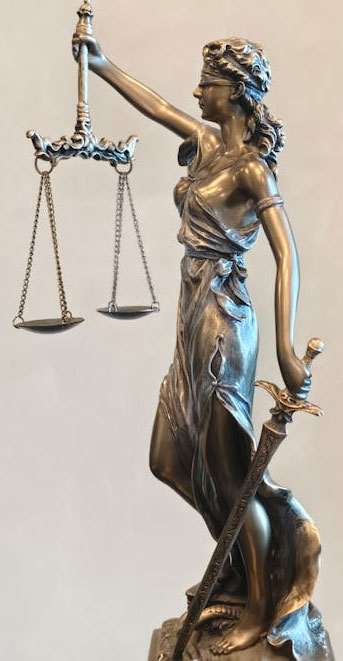
Two years ago, I saw the truth.
Two years and fifteen minutes ago I started speaking it.
My life hasn’t been worth a damn since.
I always heard that the truth will make you free.
Free from what? I’ll tell you what. In the span of two short years, I was freed from my career, my wife and daughter, and even from the lousy efficiency apartment I have been living in for the last two months. Hell yes, I’m free.
Free to take my last three hundred bucks and hit the open road in a worn-out Ford Taurus, 160,000 miles young. Free from everything that made my life what it was— everything that I wanted and worked for.
Two short years ago on a cold Friday evening I was nursing my third Sam Adams and bullshitting with the regular end-of-the-week-upper-management-wannabees for the City Daily News.
I was at the top of the mid-level career food chain where I toiled for my living. A Master of Arts degree in journalism and ten years of busting my ass had brought me to the edge of greatness and to Buddy’s Bar on what turned out to be a cold day in hell.
As a hard-working assistant editor in charge of the sports and features sections, I was just a skip and jump and some well-placed ass-kissing away from one of the two prized associate executive editors’ slots. Given the inevitability of Ed McMann’s impending retirement, that soon-to-be-vacant office with its own bathroom and big picture window had my name written all over it.
I had another advantage over the beer and bourbon swizzling reprobates I drank with during our Friday evening rituals. They had their eye on the same elusive prize that I did, but unlike them, I could actually write. Yeah, I was kicking ass and kissing ass— a lethal combination that pointed like a champion bird dog sitting on a covey of quail to the golden ring I was about to grab. A ring that would make me and mine proud and the envy of all the other yahoos at the City Daily News.
Trouble is, I drank one beer too many because it was during that third beer that fate stepped in and punctured my balloon of ambition, laying waste to life as I knew it.
During that third beer I overheard Geraldine Stevens talking to the bartender about her sorry-ass husband. Several black eyes, a neck brace, and her son’s increased bed wetting had lit a fire under her that only fear and loneliness kept in check. Enough was enough. Geraldine was ready to leave the worthless son-of-a-bitch she was married to and return to her parents in South Alabama. Trouble was, she was broke. As soon as she could put her hands on enough cash for two bus tickets, she and her son were heading south to freedom. At least that’s what she told the bored bartender who was practicing the time-worn bartender’s art of pretending to give a damn.
That’s what she was telling him. But I knew better. The king-size gimlet she was sucking on was doing the talking for her and her boy. My guess was that she was at least a broken arm or preteen suicide attempt away from speaking for herself and acting like the mother she was pretending to be.
Yeah, I could see right through her. It was like I had known her all my life. And I didn’t like what I saw. So be it. A quick trip to the men’s room to relieve myself and I would be on my way home to Natalie and Natasha, my wife and daughter, respectively.
I even remember the sound of zipping up my Dockers and feeling the cold blast of air that hit me in the face as I stepped out to hail a cab on that armpit of a February night.
As I waved my arms to no avail, none other than Geraldine, the gimlet swizzler, exited the bar and sidled up next to me. She stood too close for comfort and I didn’t like the way she looked at me. It was like she wanted something. I stamped my feet against the cold and she just stood there looking at me as if she wanted to speak but was waiting for permission. I was thinking that sometimes strangers are best left strangers when she spoke.
Unlike the I’ll-tell-you-a-thing-or-two voice from inside the bar, she asked me in a child’s uncertain whisper, “Will you help me get a cab?”
That’s what she said, but what I heard through some strange cosmic filter of fate was, “Will you HELP ME?” Not taking my eyes off her, I stepped back in shock and spoke. I never do that— speak what I see.
The conversations of truth as I see it, should stay where they belong— in one’s head. But not this time. This time it spoke me.
Offering her the contents of my wallet I said, “Geraldine, you need to leave that worthless bastard and go home to your parents before you lose yourself or worse— your son’s life.”
Geraldine’s jaw dropped and she looked as if she were about to reply. Instead, she snatched the money out of my hand and hopped into the cab that had just pulled up as if on cue in some third-rate movie.
That’s right. She took the money and got into the cab without so much as a thank you. Did she go home, retrieve her son, and take the next bus to Alabama? Damned if I know. All I recall is that for the first time I could remember, I spoke what I saw. Holding my empty wallet, I walked home in the cold to the waiting warmth of Natalie’s inquisition.
Although I stayed away from Buddy’s Bar, it didn’t seem to help calm my new-found affliction. The truth had me by the balls and every time it squeezed, I spoke. I wanted to keep my thoughts to myself but possessed by a clarity of insight I never imagined and an inability to remain silent, I could feel myself sinking ever deeper into the quicksand of opportunity.
Two months after my encounter with Geraldine, I elicited the same dumbfounded look of incredulity from my boss, Ned Jasper, who— rumor had it— was about to appoint me associate editor. The words rushed out, dragging my reluctant voice with them.
“Ned, we’ve been friends a long time, but I’ve got to tell you, screwing that journalism intern isn’t worth your twenty-year marriage to Marge, not to mention the respect of your children.”
Ned’s response was to the point. “Get out!”
As it turned out, his retort foretold a wider arc of response than I ever would have anticipated. “Get out” not only referred to the immediacy of that embarrassing moment in his office, but also came to include the newspaper itself. Needless to say, I didn’t get the promotion and soon-after found myself reassigned to the “eastern front” of newspaper work— reporting on city commission and board meetings.
The day I finally resigned, I tried to explain to Natalie that personal integrity was more important than a promotion or a particular kind of job. Her expression of disapproval fed the hidden part of me that agreed with her. Six months and a series of unsuccessful interviews and substitute teaching assignments later, Natalie uttered what has become a refrain in my life. Between sips of orange juice, Natalie’s mouth opened and Ned Jasper’s voice seemed to speak through her early morning smoker’s rasp. “Get out!” So I did.
I left it all behind, not willingly, but of necessity. Even Natasha shed no visible tears the day I left with suitcase in hand. The last sound I heard was a good riddance bark from Bobo, the cocker spaniel.
In short order, I went from writing for the newspaper to delivering newspapers. My pre-dawn route combined with education’s constant need for inner city substitute teachers, afforded me the luxury of a well-worn efficiency on 10th Avenue and evening forays to Buddy’s, where Mike, the bartender, offered me the same courtesy he had given to Geraldine a year earlier.
My friend, Sam Adams, was too rich for my current financial fortunes so I mingled with his more budget-minded kin and attempted to sort out what had become of my existence. I surmised to Mike that at least I was reasonably confident that things couldn’t get any worse.
I was wrong.
I struck up an ill-fated friendship with my landlord, Buck LePew. Buck apparently saw some semblance of the management potential in me that Ned and my former wife had given up on. In exchange for managing the eight-unit apartment house I resided in, I got to live rent-free.
A spark of my former self slowly began to re-emerge as I considered my future prospects in the field of residential management. As I became more familiar with Buck’s enterprise, I soon realized that some rocks were best not overturned. A clear pattern emerged of compounding the misery of elderly tenants on fixed incomes by excessively raising their rent and ignoring their pleas for repairs and basic service. Forcing such undesirables out of their apartments allowed the vacated units to be rented to higher paying young professionals.
Even as I tried to maintain control, I could feel that ugly entity known as a conscience beginning to awaken and take shape. It wouldn’t be long before my tongue would begin to work its black magic.
I still remember the day Buck LePew, chewing nervously on a cigar stub, was held captive by the logic of truth’s outpouring.
I had just finished an impressive oration that concluded by telling Buck that he was too good of a person to torture his elderly residents for nothing more than a little extra filthy lucre, not to mention that what he did to them, good or bad, would be returned to him ten-fold.
Buck LePew said two things in response to my well-intentioned query. His first response was, “Who the hell do you think you are, some crazy-ass prophet?” Then he uttered those dreaded, oft-told words.
“Get Out!”
I still remember the last moments I spent at Buck’s establishment. My bag was packed and positioned next to the door, and I stood in the bathroom, looking out the window. I was lost in my thoughts. Not just in my thoughts, it was me that was lost. I had nowhere to go. I had nothing. I was nothing.
I peered out of the frost-encrusted window and all I could see was a barren bush with a single branch reaching toward me. On the end of it was a single bud.
My wet face pressed against the glass.
It was a beautiful thing.
Previously published in Morality Stories (Carolina Academic Press:2017)
More articles by Michael Braswell →
More articles in the short fiction genre →
01/12/2026
02:57:57 PM