
Dr. Sanjay Singh could see the last hours of his life laid out before him: Crystalline vivid as the dew on morning grass; unstoppable as the wildfire that burns the meadow. He sat at his desk and glared at the images on his laptop. It showed the results of an MRI performed just a couple hours earlier, but the images made so sense. It was impossible, it could not be.
But it was. That had to be accepted, and it embittered Dr. Singh to know that all his previous knowing was woefully incomplete. He understood that all his understanding up to now had been pitiably partial. And it angered him to think that he would die fully aware of these gaps.
He wanted answers. But how to get them? Dr. Singh prayed.
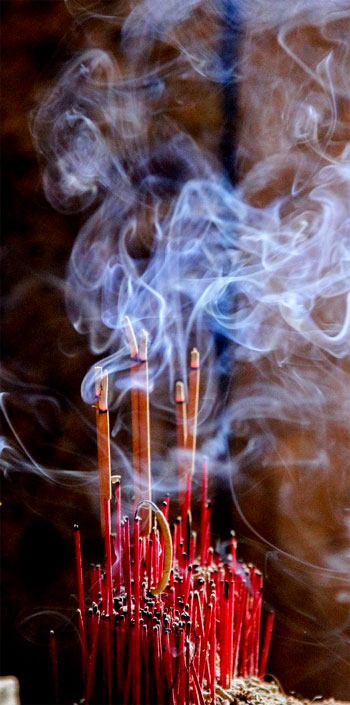
His mother had done puja for Vishnu, the preserver and protector. He recalled her briefly, wistfully: Could hear her chanting over flowers, incense, sweets, and water. Om Namo Bhagavate Vasudevaya. The image faded. That had been such a very long time ago. He’d been a child, watching with skepticism and yet too timid to raise objections. Now he had no religion, didn’t know to whom he prayed, or for what.
He prayed anyway, his prayer merely an act of surrender — as all prayers ultimately are.
***
Gen. Harlan McInnes blinked twice and opened his eyes to see a female nurse in pale blue scrubs placing a tray on the table beside his bed. He watched her pour coffee from a carafe, leaving space for cream in the thick ceramic mug. She checked the numbers on a digital device that was connected by wires to sensors stuck on the general’s chest and side. Then she turned her attention toward the patient. “How are you feeling, general?”
“Fine. Where am I?”
“You’re in Bethesda. It’s almost noon. You arrived just after six-thirty this morning.”
“Why?”
The nurse read the chart, scowling. “It just says chest pain. Your secretary called for an ambulance just after six. Your arrived unconscious and went in for an MRI. That’s all I know.” She clearly was annoyed at the meager annotations on the chart. “The doctor will be in shortly. There’s only coffee and toast, I’m afraid. Would you like me to raise your head, sir?”
“Yes.” He’d heard something a little frosty in her tone. Maybe it was just the sparse chart that was bothering her, but still — he wondered if she knew. Wondered how many other people knew. “And where’s Lt. Barker?”
“At the end of the bed. You’ll see him in a moment, sir.” She pressed a button and the general rose slowly to a sitting position. Now he could see the German shepherd, nestled into the beat-up grayish pillow bed. They’d sent it along from the office. Good. Had Barker ridden in the ambulance? The general nodded, satisfied. Maybe it was just the dog’s presence that irritated the nurse.
She left, and the commander of U.S. Northern Command explored bodily sensations. He remembered the tremendous pain, but it had gone now. He wiggled his toes, flexed the muscles in his abdomen, turned his head from side to side. He took one deep breath and then another. All systems appeared to be in working order.
The only irritant was the IV needle plugged into his arm and plastered over with two strips of medical tape. Hydration, he supposed. Maybe a glucose drip? The doctor would have been reluctant to order more than the bare minimum.
He looked around the white room: White walls, white ceiling, medical equipment gleaming white and stainless steel. Through the windows all he could see were the tops of trees and a bright blue sky. “I wonder what will come of this, Lt. Barker.”
Hearing its name, the German shepherd raised its head, snorted, puts its chin back down on its paws. Outside the door, two armed guards remained at attention.
***
Two floors up, Dr. Singh sat beside the hospital administrator. Together they were staring at the MRI images on a computer screen. The doctor pointed to the upper right quadrant of the medical scan. “And here you can see —”
“I know what I’m looking at.” The director’s voice had a sharp edge to it. Singh heard anger, but anger that maybe masked fear? “You knew the protocol, not to perform any tests on Gen. McInnes without my prior authorization?”
The doctor nodded. “The patient arrived unconscious following what appeared to be a cardiac episode. He had not responded to the nitroglycerine in the ambulance.” He shrugged. “And you didn’t answer your phone.”
The administrator jabbed his finger at the screen. “Who else has seen this?”
“No one. When the images started coming in, I sent the tech out of the room and finished running the scan myself.”
“And you didn’t stop there.”
“No. I expanding the scan beyond the . . . heart. I looked at the area of the liver, the kidneys. None of it —”
“I can see that. But you didn’t upload it into his chart? You put it on a memory stick and brought it to me. So this is the only record, and you are I are the only ones who know. No MRI tech, no nurses? You didn’t tell your wife? All right.” The administrator pursed his lips. “Have you seen the patient yet?”
“I wanted to see you first.” Dr. Singh paused, looking to his superior for guidance. His boss was twenty years his senior, had to be pushing 60, with close-cropped white hair and a square jaw. The administrator’s gray eyes were cold and distant, and Dr. Singh shifted uncomfortably, awaiting instructions that were apparently not going to come. He wasn’t sure how to phrase the question, or questions, that had been percolating since this morning.
Before he could put the words together, the administrator snapped the computer screen closed, yanked out the memory stick, stuck it in a desk drawer. “The patient’s vitals are strong. Go look him over. If he’s healthy enough to leave, send him home.”
“But —”
“But what? You want to write up a medical paper on this, win the Lasker Award, maybe a Nobel Prize?” The administrator shook his head. “This is a military hospital. That man is a four-star general. Whatever else he is, it’s none of our business. If he’s healthy, send him home. Is that clear enough, doctor?”
“Yes sir.”
“You committed a serious breach of protocol by scanning him in the first place.”
“Yes, sir.” Dr. Singh got slowly to his feet, raked his fingers through his thick black hair, tried to read behind his boss’s cold eyes. There didn’t seem to be anything else to say. “I understand perfectly. I’ll go check on the patient.”
He left the room, fully intending to ignore his boss’s instructions. He wanted answers.
The administrator assumed as much. Once the door had closed, he dialed the special number. He recited a string of digits and after it was accepted, he held in silence for two minutes before the connection was made. “This is Bethesda,” he said. “We have a situation, Mr. President.”
***
A tap on the door. The general opened his eyes, saw a brown man in a white coat enter the room, introducing himself as Dr. Singh. “And this must be the famous Lt. Barker. I’ve heard he comes to the White House with you. I wonder if it’s true.” He reached out to let the dog sniff the back on his hand.
“The lieutenant goes everywhere with me. And he hasn’t eaten today, as far as I know.” At this the shepherd’s ears pricked up. The doctor made a phone call, and then made a pretense of checking the readings on the medical machines. He carried the chart over to the window and stood there looking over the sparse notes. In just a few minutes another knock came, and Dr. Singh took a plate from the orderly and closed the door.
“He’ll eat Salisbury steak? I’m afraid it’s the best our kitchen can do.” He set the plate down. The dog stood, extended its forepaws, and stretched. Then the general and the doctor watched as the shepherd made short work of the meat, licked around the plate a few times, and lay back down.
“Thank you.” The general nodded his appreciation.
“Your vitals are strong. Color is good. Feeling alright?”
“I’m fine. Obviously it wasn’t a heart attack — and I’m using the term loosely, as I’m sure you understand. For our purposes, suppose we call it indigestion?” He watched the doctor carefully, found him hard to read. The general nodded toward a chair, and the doctor pulled it over, seating himself at the bedside. “I assume you talked to the director. He instructed you not to ask any questions?”
“That’s right. And if I did ask questions, would you answer?”
The general regarded him, observed the intensity: Eyes fixed, hands clasped, leaning slightly forward in his chair. He sighed. “Ask them and we’ll see.”
The doctor nodded. Now the general waited, playing out the silence. After a minute the doctor cleared his throat. “I don’t know what you are. I have medical curiosity, of course. And not knowing, I also worry that you are in charge of all our homeland defense. Does that sum up the situation?”
“It does. Thank you for making it clear.” The general hesitated. As he framed his words, he picked at the tape that secured the needle in his arm, noticed the doctor noticing and left it alone. “You have a choice, you realize,” he said eventually. “Some people would prefer not to know. Or be too afraid to find out. What’s in the drip, by the way?”
“Glucose. It seemed safe. There was no reaction.” The doctor shrugged. “I would prefer to know. I understand the choice I’m making.”
The general saw no hesitation behind the eyes, no doubt. “I believe you do. All right. I’ll tell you what I can. But first I need to be clear on some things. For instance, who else knows?”
Dr. Singh explained, as he had for the director: MRI tech sent from the room, nurses in the dark, the only records were on the memory stick, now locked in the director’s desk drawer. “So it’s only me and the director.”
“I appreciate discretion in a soldier, and I appreciate it in a medical man. There’s a time for talking and a time for keeping quiet.” He could see the doctor shrug off the compliment, recognizing it as an empty gesture: He wasn’t interested in window dressing. A clever man, perhaps, and he wouldn’t be put off easily. Tell him the truth? The general didn’t think anything less would satisfy, and the doctor’s curiosity needed to be satisfied. He deserved that much. “This is all highly classified, of course.”
Dr. Singh blinked once. Otherwise he showed no response. He had his eyes fixed on the general, an intent look that the general found disquieting. Clearly the doctor fully understood the situation and it bothered the general a little: The doctor’s stubborn silent insistence, his certainty.
Dr. Singh pressed. “I intend to understand this. If you are willing to explain.”
He put it as a challenge and the general wasn’t used to being challenged. The doctor rose up a notch further in his estimation.
“Where I come from,” the general said, “we put ourselves through three full-out nuclear wars. Damn near did away with everything and it took a long time to rebuild. Our year lasts almost 32 of your months, and even at that it took a couple hundred of our years for us to put ourselves back together.” He anticipated the doctor’s question. “It doesn’t matter where. I could give you an astral coordinate but would it mean anything to you?”
“It would not.”
“All right. So that explains what you saw. A heart with six chambers. What might be spleen and liver and kidneys, but all in the wrong places. And you surmised correctly. I’m not like you.”
The doctor nodded. “Yet you look like us.”
Medical curiosity? That made sense. “We can alter the externals. I’m sorry I don’t know enough about the mechanism to explain it to you. I know how to do it, but not how it works. Even beyond the external appearance, though, there are other similarities. You observed? Maybe there was a common ancestor, eons back. Some DNA carried on an asteroid from us to you, or you to us? Or else just a coincidence, evolution finding similar solutions under similar conditions? I’m sorry I can’t give you better answers.”
The doctor considered this, made no objection. “I said that I have two concerns,” he pointed out. “So that’s what you are. But you’re also a powerful military leader. I don’t suppose that is a coincidence. Why are you here?”
The general approved of this. The doctor was being pragmatic, straightforward. Had Dr. Singh known the general better, he’d have recognized the slight twitch of the upper lip as a smile.
In 30 years he’d twice before had to disclose his identity to people outside the privileged circle, and neither conversation had been nearly so . . . sensible. Those were unpleasant memories. He focused on the present need. “Once we got ourselves put back together, we made some rapid advances, and then we started looking outward, watching for others who had achieved the nuclear threshold. When we identify one, we send emissaries to try and guide them so that they don’t repeat our mistakes. To help them handle their newfound power in ways that are less self-destructive.”
To the general’s surprise, the doctor ignored the substance and caught onto the verbiage. “Emissaries, plural. You’re not the only one here.”
There was no need to answer that, to explain about his counterparts in Russia, China, India. The general nodded and pivoted to another point, or non-point. “You likely want to know how I got here, how we deal with the distance. We don’t share that and we won’t until you’re ready for it. It will be some hundreds of years from now, if you can get to that point.”
The general stretched, scratched behind his head, swung his legs off the side of the bed. With a swift movement he peeled the tape strips off his arm, pulled out the needle and left it hanging at the end of the rubber tube. When he went to peel off one of the sensors plastered to his chest, the doctor told him to wait, and gestured toward the vital-signs monitor.
“It will set all the lights flashing at the nurse’s station if you just pull those off. I don’t suppose you want three nurses running in here with defibrillators?” The doctor wasn’t laughing, but the general caught what might have been a trace of humor, a sad smile.
Gen. McInnes felt some regret. He understood the necessity of collateral damage, but he liked this man who knew how to handle delicate matters sensibly, with dignity. “Did you have any more questions?”
“Many more, but none that matter, I suppose. If you are what you say you are, here to help us, then I am obliged to extend my thanks, sir.” The doctor powered down the monitoring device and gestured toward the sensors. “It’s all right now. Do you want me to help remove those?”
***
Sanjay Singh was indeed a pragmatic man. He understood that he was going to die. Maybe the general’s story was true, maybe not. Either way, it wasn’t a story he was ever supposed to have heard. Just as the medical scans had given him a glimpse of something he wasn’t supposed to see.
He went to his office and thought about his next move. From the pocket of his lab coat he took a duplicate memory stick and inserted it into his laptop. It took only a minute to upload the files onto his cloud storage. Then he typed out his narrative and printed it, not bothering to save the digital document. He put the pages in an envelope and marked it: “In case of my disappearance or demise.” He put this in another envelope and addressed it to his brother in Tennessee, a college professor who might know what to do, to get the story out there. He took that envelope down to the main administrative office and slipped it into a pile of outgoing mail.
Back online. He opened an anonymous browser page, accessed his cloud storage, and copied the images to a freshly-created Gmail storage account. Then he texted the login credentials for that account to select colleagues in Britain, Spain, Singapore: People he’d met at various academic conferences. “I’m looking at an unusual case,” he wrote. Nothing more, but perhaps that would be enough.
When they investigated his laptop and found the images in cloud storage, it was just possible they wouldn’t think to look further, and that the Gmail storage would go unnoticed long enough for his colleagues to access the images.
Maybe the general’s story was true, in which case — better to keep the whole thing quiet? Singh had no way of knowing. “But at least the information won’t die with me,” he told himself.
***
The general straightened his tie, then walked to the window where so far all he’d seen were the tops of trees and a stretch of sky. Now he could look down and see the roofs of cars, people heading in and out of the building, a stretch of the surrounding lawns. He tapped the window glass and Lt. Barker rose, padded across the room, puts his forepaws on the window frame and stood looking out.
“What do you think, Barker?”
The dog turned, cocked its head, raised one eyebrow. “It will be dealt with,” he said.
“It’s a shame,” the general said. “I rather liked Singh. He didn’t make a fuss. Intelligent men are hard to come by.”
The dog sighed. “And that’s why we are here,” he said, and went to curl up again on his grayish pillow bed.
***
Dr. Singh called his wife and they talked about their plans for the weekend. The younger boy had soccer practice, the oldest would be working in the pizza shop. Husband and wife strategized who would drive whom where, and what day they’d get the shopping done. All the time Singh listened not to the words, but to the sound of her voice.
“I love you, Suhani.”
“Why, Sanjay!” She giggled. “Of course you do. I’m delightful.”
He hung up the phone. Then he looked over his current patient roster. The woman with the gall bladder complication might require some extra attention, but it would be seen to. He took one last look at his office, switched off the light, strode down the hall. His shoved his laptop into the garbage chute — perhaps it would delay the investigators? — and then rode the elevator down to the lobby.
As he stepped through the sliding glass doors a black sedan pulled to the curb and two men in suits and sunglasses stepped out. One held open the back door, the other stuck to Singh’s side until the doctor had seated himself, then closed the door. Singh assumed it would be locked from the outside.
He leaned back, closed his eyes, prepared himself for what would come next. He imagined he could again hear mother’s voice, invoking her preserver and protector. Om Namo Bhagavate Vasudevaya . . .
The Piker Press moderates all comments.
Click here for the commenting policy.