
The baseball field near Terry’s high school is eight blocks from the house, at the end of a dirt road that winds along sandy patches of tall weeds and skinny trees so frail even the birds don’t bother with them. It doesn’t usually take her long to walk there, but today she has Grandma Hilda with her and the old woman has been getting distracted, stopping to greet dog walkers, admire lawns that have defied the drought.
“Hilda, come on,” she says. Terry has been calling her grandmother by her first name since kindergarten. She remembers her mother scolding her for it, but Hilda never seemed to mind. “The game’s started already,” she calls, but Hilda doesn’t come. She bends down to peer at something near the fence.
By the time Hilda and Terry reach the field, Terry is sweaty and uncomfortable. The huge black-topped parking lot is way too large and way too far from the bleachers, especially on a hot day like this one. There’s no escaping the sun. The refreshment stand, rarely open, has a narrow overhang that offers about as much shade as a postcard. The metal bleachers get hot enough to bake thighs. Nobody over forty lasts more than an inning without a towel to sit on, so Terry has beach chairs. They’re not heavy, but after eight blocks, they’re irritating her shoulder and scratching the side of her leg.
Terry’s a sophomore now. She’s been living with Hilda for five years, ever since her parents separated. She saw them a lot in the beginning, but that didn’t last. Her father left their unremarkable New Jersey shore town and moved to Greenwich, Connecticut, with his fancy new wife and their flawless new baby. After a while he treated Terry like an old car—you keep it cause it still runs, maybe take it for a spin once in a while, but the new model is the one you take care of, the one you want the neighbors to notice.
Terry’s mother, Greta, weary from years of commuting to the city and decades of living in hiding, had long since made plans to move to Manhattan. She’d lived in Atlantic Hills all her life, hated it. The town has zero personality, she says, no bookshops, no arts community, nothing to make anyone want to stick around—except maybe the view of Manhattan. She’s far from wrong, although Hilda would never admit it. On weekends, parents numb out at their kids’ soccer games. When there’s no game, they go to the mall and shop themselves silly. The ones who insist on having a purpose in life go to Home Depot. And if there are others like Greta, who’ve fallen into the deathly pattern of posing as a loving wife, a woman who doesn’t desire other women, they keep it to themselves.
Hilda, baffled by her daughter’s revelation but saddened by her pain, understood she had to leave. She found a place on the Upper West Side. That’s where Terry was supposed to go, until she and Hilda finally convinced Greta to let her stay in Atlantic Hills, at least until the end of the school year. Hilda’s house was just a few blocks from the school, and it would be easy for Greta to visit.
Hilda hired a full-time helper, a retired nurse’s aide named Margaret, who lived across the street. The woman did a bit of laundry, a bit of cooking, occasional dusting, but mainly she was there to keep Greta from arguing that Terry was a burden on Hilda. She wasn’t. She and Hilda were a perfect fit, always had been. They’d bonded for keeps before Terry was a month old, when Greta’s maternity leave ended and Hilda filled in.
The school year ended without incident and so did the summer and by the start of sixth grade the notion of Terry moving to the city became something no longer discussed. Greta’s resentment about it would surface now and then, but Terry sensed the relief as well. Her mother got promoted, took on more clients, and her visits, frequent enough at first, trailed off. Terry was safe, doing well in school—even better than before the separation—and the friends she’d made in preschool became a tight knit group.
* * *
Terry reaches the gate that opens to the field and calls to Hilda again, with no effect. She lifts her hair off her neck, but it brings no relief, because it’s not just the heat that’s getting to her. It’s Hilda. She’s not herself anymore, not all the time, not for almost a year now. She forgets things, some important, some not—whether she took her medicine or paid the gas bill, the neighbor’s name. So Terry keeps a close eye on her, does everything she can to cover for her, but people are starting to notice the lapses. Margaret stays past seven most nights, to keep Hilda company while Terry gets her homework done. Terry’s boyfriend, Danny, is worried. He scolds Terry for keeping the worst of it from her mother. But she resists telling Greta too much, because she’s bound to overreact. Then how long would it be before she decides Terry can’t stay with Hilda anymore and moves her to New York, away from her school, her friends, everything she cares about?
Hilda finally catches up, and they head through the gate toward the bleachers. A bunch of people, maybe ten or so, probably parents with the visiting team, are sitting shoulder to shoulder in the highest row. The section reserved for Terry’s school has a scattering of parents, along with a few seniors from the football team.
Terry sets up the chairs at the far end of the home-team bleachers, just behind first base. The bottom of the second inning is already under way. No score yet, but Atlantic Regional has men on first and second. Hilda wants to know about the batter—his name, what year he’s in, what position he plays—so Terry fills her in. Danny is on base, and Hilda claps her hands, delighted with him.
By the end of the third inning, more kids from school have arrived—all freshmen—and they’ve laid claim to the top row of the home-team bleachers. Every now and then one of the boys shouts out the name of a player he knows, offering support, but most of their energy is spent razzing the visiting team.
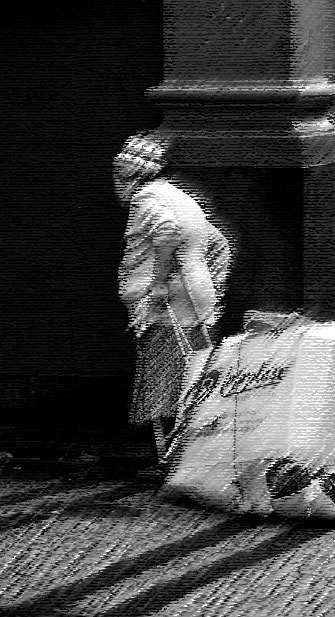
Hilda’s questions have trailed off but she remains attentive, until she notices crazy Mary, the disheveled old woman Terry and her friends see around town now and then, especially when the weather turns mild. She wears long dresses with ragged hemlines that reach below her calves and a dirty raincoat just as long. Her swollen veiny ankles are stuffed like sausages into ratty sneakers that must have been white at one time, and she pushes a shopping cart overflowing with a bizarre assortment of her precious junk. She talks nonstop but has no phone on her as far as Terry can tell. Sometimes she sounds almost conversational, as if she’s filling the world in on her family’s comings and goings. Other times she seems frightened, angry even, that people don’t see what’s happening all around them. That’s actually when she makes the most sense to Terry, when she’s wailing about children being shot at their desks or faucets spouting poisoned water.
Hilda leans forward in her chair to get a better look at the woman. She’s seen her around often enough before so Terry can’t understand why she’s so fascinated with her now. She taps Hilda’s shoulder to distract her, points to the boy at bat. “Look. It’s Josephine’s brother. He didn’t think he’d get in the game today.” It doesn’t work. Hilda raises her arm, her plaid carry-all swinging from her elbow, and waves to crazy Mary, calling her over. Terry begs her to stop, tugs at her arm. She’s afraid Danny will see Hilda acting weird. But Mary is already navigating the bumpy path between them, guiding her cart, a stuffed parakeet wedged into the front, like a hood ornament on an old Chevy. Hilda beckons Mary closer, as if she’s been saving her a choice seat.
“Stop that,” Terry tells her. “We don’t want her sitting with us.”
Hilda glares at her. “That’s very unkind of you,” she says. “Very unkind.”
Mary is just a step or two away now and Terry can smell her, a dreadful odor like something rotting in a damp basement. “I have it. I had it all along,” the woman tells them, as if this is news they’ve been waiting to hear.
“I’m so glad,” Hilda answers, sounding relieved.
“They told me I wouldn’t need it,” Mary says, “but I don’t listen to them anymore. I don’t listen.”
Terry groans. God knows what wavelength these two are on. Terry mostly manages to cover up for Hilda when she starts acting strange. Weeks go by when Hilda is her old self again, long stretches when she’s as sharp and perceptive as ever. Even Margaret says so. But Danny has known Hilda too long, since before Terry started high school. He’s hard to fool.
So is Greta. Last month, at the end of one of her rare visits, she leaned into the hallway mirror to apply a parting coat of lipstick and whispered that it might be time to find a safer place for Hilda. Terry wanted to smack the tube out of her hand. “She’s safe right here, with me,” she said, unable to soften her tone.
Greta didn’t contradict her. She didn’t have to. “We’ll see how it goes,” she said. “But we should get things settled before school starts next year.”
“She’s fine, Mom. Ask Margaret. She’s here all day with her.”
“I talked to Margaret. She’s taking Grandma to the doctor next week.” Her voice was flat, quietly firm, the way she speaks to subordinates when she’s past the point of compromise. Terry heard the edge in it and wondered if her mother wasn’t somehow satisfied that Terry’s years of resistance to moving to the city might turn out pointless after all.
Mary rummages through her cart, comes up with a frying pan that’s missing its handle.
Hilda reaches for the beat-up pan. “Will we need this?” she says.
“Don’t touch that. It’s dirty,” Terry says, careful to keep her voice down, because they’re attracting attention.
Hilda takes the pan anyway, turning it this way and that. “Where’s the handle?” she says, unfazed by the grease stains scorched into it.
“Grandma, give that back.”
“He broke it,” Mary says. “I knew he’d break it. I warned him.” Her voice is loud and abrasive, out of sync with the cheers and prompts of the little crowd and the indistinct voices from the dugouts. Terry can’t see a way to get rid of her.
“You gonna fry up some burgers?” one of the freshmen calls. His crowd rewards him with a chorus of nasty laughter.
Mary raises a fist and yells up at the boy. “You broke it!”
The kids wave their arms, gleeful they’ve engaged her. “Make mine with cheese,” someone yells. More chime in, shouting over each other like impatient waiters to a short-order cook. Mary fidgets, her shoulders rising and falling in a jerky rhythm, unnerved by their relentless jibes. She takes back the pan, grabs the handle of her cart, and pushes her belongings across the length of the bleachers, back toward the gate.
The boys have upset Hilda as well and she turns to Terry, as if there’s something they should do to stop them. Terry shakes her head to show she disapproves, secretly grateful that the teasing made Mary retreat. She doesn’t want Hilda to have an incident. That’s the word Terry uses now for the more serious lapses. They’re not like the little missteps that began last summer, easy to dismiss. These are bigger, stranger, impossible to mistake as anything but the terrifying signs of something going very wrong.
Like the one two months ago, early in the morning. Terry’s dog, Slug, a cross-eyed border collie, led the way into the sewing room. He sat at attention beside Hilda’s chair, tail dusting the floor, as if expecting a reward for getting Terry out of bed. Hilda was bent over her old Singer. It was odd for her to be sewing at that hour, but the machine’s steady purr was the sound of Hilda at her best—capable, attentive—and Terry tried not to worry. “How come you’re at the machine already?”
Hilda straightened up, the back of her sewing chair higher than her head. Her hair, mostly white and long, way past her shoulders, was pinned up as usual, a filigreed halo against the blue upholstery. She smiled, a cure-all, and Terry came and stood behind her chair, kneading her shoulders. She smelled like minty toothpaste. “I’ll have this finished today,” Hilda said. She was making Terry a jacket to wear over her dress for the spring dance.
“What’s the rush?” Terry said. The dance was still weeks away, and the jacket looked to Terry as if it was coming along nicely. She didn’t want a new jacket anyway, though she didn’t have the heart to tell Hilda that. She’d found one in the attic, a relic of Hilda’s, with shoulder pads and tiny pearl buttons and cuffed sleeves. With a few alterations, it would be so perfectly retro. They used to do that together, rework the gems Terry dug out of dusty trunks. Awesome stuff. Double-breasted suits and bell-bottom pants, mini-dresses with geometric patterns of bright circles and squares.
“I think we’re just about done here,” Hilda said, lifting the jacket with a flourish.
“You finished the sleeves already?”
“Last night. Just had to add the piping. You should try it on. That way I can press it while you’re in school.”
Hilda pushed her chair back and stood to hold up the jacket. Terry slipped an arm into one of the sleeves, and the lining felt silky. But when she tried to get her hand into the other sleeve, she couldn’t find the opening. She twisted around to see if Hilda might be holding the jacket at the wrong angle, but that wasn’t it. The opening at the shoulder was too small, smaller than her fist.
Terry pulled off the jacket and spread it open on the loveseat. “I think something went wrong. Here. See?” Slug stepped up as if to have a look for himself.
Hilda leaned over to examine the sleeve. “Yes, I see what happened.” Color rose in her cheeks, and she sounded hoarse. “I can fix it,” she insisted, but she seemed uncertain, her chin trembling.
Terry put her arm around her. “No, leave it,” she said, folding the jacket over her arm. She hated seeing Hilda upset like this. “I’ll wear my black jacket, the one you made me last year. I love that one.”
Hilda snatched the garment away. “No. You’ll have a new jacket, as we planned.” The dog slunk out of the room, tail down, as if fearing he’d be blamed. “I can fix this,” she repeated harshly. But Terry wondered who she was really trying to convince. She seemed to be talking to herself. This was one of the girl’s first encounters with it—Hilda’s new alien, unpredictable self, bent on betraying her.
The incidents, big and small, are more frequent now, and Terry hates them. Hilda sometimes calls her Greta. She doesn’t correct her, but she wants her grandmother the way she used to be. She knew the fabrics Terry loved, the snacks she couldn’t pass up, the names of her friends. She kept track of Terry’s doctors’ appointments, her vaccinations, her shoe sizes, her height each year since the first time she stood up on her own.
The girl spoke her first words to her grandmother, and later her schoolgirl secrets. They became confidantes, a connection Terry never had with her mother, whose long silences and dark moods left the girl feeling she’d caused them. Hilda’s house, just blocks from the beach, was a wonderland for Terry. When they played hospital together, she would be Dr. Terry and Grandma would be ailing Hilda, the patient she miraculously cured—over and over and over again. It took every instrument in the doctor’s kit to get her well, and Terry had a merciless array of plastic needles and nasty little sugar pills, but Hilda endured them without complaint, as if the child was destined to free mankind from every ill.
Terry resents the meanness of what’s happening, how spiteful life can be. Gratitude doesn’t come easily anymore, because she has no time for it. More and more, the details of their day, even paying the bills and making dinner, are left to her.
Sometimes when she’s in class or standing at her locker, her mind is at home, following her grandmother from one room to another, praying she won’t leave a hot iron on a blouse or forget she has something in the oven. Between classes she calls Margaret to check in. When Terry was little, she used to follow Hilda from room to room. The woman couldn’t leave her chair without Terry chasing after her. It was like a game, because wherever Hilda went, she’d find something to show the child—a string of beads, a huge wooden spoon. And no matter what it was, Hilda could transform it. A handkerchief became an exotic veil. The buttons in her sewing box turned into Roman coins. And Hilda would let her take the treasures home if she wanted to. But Terry didn’t want that. She wanted all those magical things to stay where they were, in Hilda’s house, so she could find them again the next time. Years later, after her parents had gone their separate ways, Terry understood that the only magic had been Hilda, and the way the woman loved her.
* * *
The freshmen cup their mouths and shout louder, some of them stomping on the metal bleachers. “Hey, Mary,” one boy calls, “you can’t leave. I’m hungry.”
“Where is she going?” Hilda says, getting to her feet. She waves her hand in the air to get Mary’s attention and tips over her chair.
“Hilda, stop.”
“Come back,” Hilda calls. “Come back.”
“Sit down. Please,” Terry tells her, righting the chair.
Hilda sits, but she’s gesturing with both hands now, like a refugee parted from her child.
“Where’s my burger?” a boy yells, waving a dollar bill in the air.
“That’s enough out of you,” shouts one of the fathers. It’s Mr. Lynch, Danny’s dad. The boys get quiet but not for long, because Mary lets out an anguished string of curses as she searches her cart, lamenting the loss of some possession.
A line drive to center field takes the attention off Mary. But the ball smacks into the outfielder’s glove, ending the suspense, and the boys start in on her again, calling, whistling, hooting. One throws an empty soda can, and Mr. Lynch stands, points a finger at one of the freshmen. “Are you gonna knock it off? Or do I have to come up there?” he says, climbing two rows closer to where they’re seated, daring them to step up. No one volunteers.
Hilda can’t settle down. She’s mumbling things Terry can’t make out. She whispers gently that it’s time to go, but Hilda resists, her eyes glued on Mary. Arched over the cart, the woman removes random items one by one—a small vase, a metal ashtray, a can of Campbell’s soup—and places them on the ground.
Terry stands up. “Come on. Let’s go home.”
She won’t move.
“I have it,” Mary calls to them. With a bright yellow, floppy-brimmed sun hat retrieved from her cart, she heads toward them again, holding it up like a salesclerk ready to show them the perfect gift. “I have it,” she repeats, “I have it,” as if Hilda’s been waiting far too long for this gem. She shuffles closer, crossing the length of the bleachers, her voice loud and nasal, but there’s a kind of confidence in it, as if she understands something about Hilda that Terry can’t.
“I don’t feel good. Please,” Terry whispers. “We have to leave.” She wants to wrench her out of the chair, end this fiasco. But Hilda won’t listen and Terry wants to shake her. She wants her life back. She wants Hilda out of her head, out of her plans just for one damn day. Nothing is the same anymore. Nothing can happen that isn’t about Hilda. They can’t even watch television in peace. The other night she wandered out of the living room, out of the house. Terry thought she’d gone to the kitchen until Slug spotted her outside, barefoot on the lawn, and scratched at the screen door to get to her. Terry pulled her back inside, screaming at her, picturing what might have happened had she wandered down the road, onto the highway.
Hilda was shaken, both of them in tears. Terry apologized, made her some tea, but she couldn’t sleep that night. The familiar panic settled icy on her skin, the dread that Hilda can’t be fixed, that life will be turned inside out again, like when her parents split up. Terry turned on her side, pulled the quilt to her chin, let the warmth erase the fear. Hilda will be all right. The bad spells come and go and she always comes around.
Hilda looks up at her granddaughter, a familiar flash of concern on her face. “What’s wrong? Are you getting your period?” She says it loud enough to draw giggles from some boys nearby. Terry puts a finger to her lips, desperate to quiet her. At first, when her grandmother couldn’t finish a sentence or forgot to turn the car off or pay the phone bill, Terry mostly felt sorry for her, a little worried. Now it’s not so simple, because the anger sets in. It’s like something caught in her throat, something she can’t swallow. She knows it’s wrong. She loves Hilda and she loves living at her house. Being there after her parents broke up helped her pretend her parents were still just a few blocks away. One of them might walk through Hilda’s door at any moment and ask to see her homework or take her to the mall. But by the time she started high school, she stopped pretending. She tried not to need them as much because there was no point. Nothing she did ever made them change. She clung to her friends, to Danny, and in Hilda’s house that sense she’d always had of being in the way was gone.
Hilda finally rises from the chair, but Mary is on them, pressing the sun hat into Hilda’s hand, talking nonsense. The freshmen make the most of it, taunting and laughing, but they stop abruptly when Lynch scolds them again. Other parents join in, telling the boys they’ll have them barred from the games. Hilda, upset, lets the sun hat drop to the ground.
Terry feels a hand on her shoulder. It’s Danny. “It’s okay,” he tells Hilda, his tone measured, the way he’d talk to a frazzled pitcher. Hilda gets up, takes his arm, lets him lead her toward the gate. Terry’s not surprised. Hilda is always calmer when Danny’s around. She trusts him. He knows how to get her to smile. He makes everybody smile. That’s what made Terry like him so much in the first place, when she found him standing on the beach that day. She was still living with her parents then. Her dad was mostly not around and her mom was forever going on about how Terry would love living in Manhattan.
It was a rainy Saturday morning—after yet another foot-stomping, book-throwing tantrum that did nothing to convince her mother to let her live with Hilda. Terry stormed out of the house and wound up at the beach. And there was Danny, pulling as hard as he could on a fishing line, trying to reel in his catch.
Danny was in seventh grade, two years ahead of her, so she didn’t see him every day, but she recognized him right away. His thick curls, wet from the rain, were stuck to his forehead, and he wobbled as the reel resisted him. She watched as he got the fish out of the water, then moved closer till she was an arm’s length away. The fish—a fluke, it turned out—twisted and wiggled in front of him on the line. He tried to reason with the thing, calling it Frankie. She loved the way he talked to it, the way he chuckled. Then she heard a sound she almost didn’t recognize—her own laughter.
Danny wanted to throw Frankie back into the water, said his mom was tired of cleaning fish guts every weekend. So Terry took him and Frankie to her grandmother’s house. Danny and Hilda cleaned the fish at the kitchen counter, their hands all gushy from fluke innards, their faces contorted into a silly mix of disgust and glee, and Terry knew she could never go to New York with her mom. She could never be anywhere but right here, with them.
Up ahead, Danny and Hilda pass through the gate, but Mary follows them, stopping here and there to pick up the things she placed on the ground. Terry folds up the chairs, grateful they don’t weigh much, and hurries past her, but Mary lumbers after. Terry glances back at her, sees her closing the gap, cart in tow, the yellow hat perched on her head. She gives the woman a look meant to discourage, but it doesn’t. “Go away,” Terry tells her. The urge to cry sneaks up on her. Why can’t they do something about these people? How can she be allowed to roam the streets like this?
Danny and Hilda are in the parking lot when Terry catches up. “Those boys are a disgrace,” Hilda says.
“I know,” Terry agrees, putting the chairs down. She can tell Danny is upset because he won’t look at her, even when she touches his arm.
“I’ve a good mind to call the principal’s office.” Hilda rummages through her bag. “Terry, did I give you my phone?”
“This is insane,” Danny whispers.
“She’s always like that,” Terry says, looking over at Mary, standing at the far corner of the lot, beside a bin overflowing with donated clothing.
“I don’t mean her,” he says, ushering Terry a few steps away from her grandmother. “I mean Hilda. Look at what’s happening to her. Maybe your mother’s right. Maybe she needs to be in the city with her?”
“Stop it. She’ll hear you.”
“How long do you think you can keep this up?”
“Hilda’s fine. She just said she wants to call the principal. Does that sound like someone who doesn’t understand what’s going on?”
“Stop playing games. She’s losing it.”
“What old person doesn’t get weird sometimes? It’s not that bad.” She watches Mary lift a plastic trash bag left leaning against the bin, and it splits open, its multicolored innards bursting out. “Anyway, Margaret and I watch out for her.”
“Did you tell your mother she left the house the other night?”
“She doesn’t need to know every little thing. Besides, Hilda understands. We talk about everything. She knows she’s forgetting things. She knows we have to be more careful. My mother would only blow it out of proportion.” Terry turns, ready to head back to Hilda.
“I’ll tell her then.”
Terry stops abruptly. “What did you say?” She wants him to repeat it, because she can’t believe he understands what he’s saying.
“I’m calling her after the game.”
Terry moves in close. “This can’t be left up to my mother.”
“I can’t watch this happen to her.”
Terry steps away from him, but he grabs her arm. “This is no good. Can’t you see that?”
“My mother doesn’t care what happens to Hilda,” she hisses.
“Of course, she cares. She’s your mother.”
“She’d undo that if she could. And she won’t think twice about turning her back on Hilda, dumping her in some nursing home. Just like she turned her back on everyone else.”
“You don’t know that. You’ve got to talk with her.”
“And how often do you think you’ll see me once I’m stuck in a high rise on the Upper West Side?”
“Don’t be so dramatic. Moving to the city isn’t the end of the world,” Danny tells her. He’s graduating in two months, has his own car, thinks the world is his backyard. Even before he got his license, he was driving into Manhattan with his dad. “We could see each other whenever we want.”
“And what happens to Hilda?” Terry says.
“She’ll love New York. She’s always telling me she doesn’t get in there enough.”
“Mom’s place is too small for the three of us.”
“So you’ll find a bigger place.”
Danny doesn’t get it. He comes from a home where parents are attentive, loyal. Terry is sure that Greta would never want Hilda in New York, not unless it’s in a place for old people and caring for her is somebody else’s job.
“You know what living with her would be like? I’d be an afterthought again, an occasional shopping companion, someone who isn’t needed by anyone—cause Hilda would be put away.”
Hilda calls to Terry again.
“I can take care of my grandmother, so just stay out of it.” Terry returns to Hilda’s side, tells her Danny needs to get back to the game.
“No,” he says, catching up. “I’ll walk you home.” He picks up the chairs.
“Don’t be stupid,” Terry says. “You’ll wind up on the bench just for leaving the game.” She tugs at the chairs, but Danny holds on.
“She’s right,” Hilda says, patting his arm. “I’ll come to the next game. And the playoffs too.”
Terry can’t help smirking at him. Hilda knows exactly what’s going on. She knows where she is. He’s all wrong.
“It’s not that far,” Danny says. “I’m coming with you.”
“No, you’re not. We’re fine.”
Terry’s tone draws a puzzled glance from Hilda. “You’re angry,” she says. “What’s wrong?”
“I’m not. My stomach’s bothering me.”
Danny hands her the chairs, and Terry hangs them over one arm. For Hilda’s sake she gives him a wave before she coaxes her away from him, as he heads back to the field. She tries to get Hilda to walk faster, because Mary has lost interest in the Goodwill bin and she’s headed their way, calling to Hilda, who turns to look at her.
“Look,” Mary calls. “Look what I have.”
Hilda stops. “She’s telling us something.”
“Ignore her. She’s not talking to us.”
“Yes, she is. She’s looking right at us.”
Terry tugs at Hilda’s elbow, but it does no good. “Please. My stomach hurts. I need to get home.”
Mary calls to them again, one hand guiding her cart, the other holding something bright green high above her head. It flutters in the breeze, and Terry can’t tell what it is.
Hilda points to Mary. “We should see what she wants.”
“Hilda, please.”
Mary is practically running now. “Look what I found.” Terry can’t help staring at the woman, her broad victorious smile, the bright green thing she’s waving like some bizarre Olympian pennant.
Terry tugs again at Hilda’s arm but she won’t budge.
Mary pulls the cart up beside them, and the breeze carries the woman’s awful smell, like the stench of something dying. Terry imagines the woman decaying before their eyes, a wicked Witch of the West.
“For you,” Mary says to Terry, holding in both hands what the girl sees now is a feather boa, richly green, with long, wide plumes—clearly something that was once luxurious, something she would have prized had she found it in Hilda’s attic.
“How lovely,” Hilda says.
As Mary brings it closer, Terry jumps away with a yelp.
“No, no, it’s for you,” Mary tells her, closing the space between them, raising the boa higher so she can drape it around the girl’s neck.
“Get away from me,” Terry screams, shoving Mary with such force the woman loses her balance, tumbles to the ground in a kind of slow-motion pirouette, the boa twisting around her body. “Oh, my god. I’m sorry,” Terry says. The urge to reach out and help the woman is strong, but she can’t bring herself to touch her.
Hilda lets out a soft moan and bends over Mary, asking if she’s okay. The answer is incoherent, but Terry hears no anger in it. She takes a deep breath and holds it, bracing herself for the odor, and offers the woman her hand. The skin feels like parchment, like there’s nothing beneath it but dry sand. Mary gets to her feet, reaches for her cart to steady herself. She seems disoriented. “I’m sorry,” Terry tells her again. “Are you okay?”
Mary nods, bends to pick up the boa. She offers it once again to Terry, who refuses it more gently this time. The lines around the woman’s mouth deepen as she purses her lips and Terry expects her to say something nasty, but she doesn’t. “Okay then,” Mary whispers, tucking the boa into her cart, and heads back in the direction of the Goodwill bin.
“Goodbye,” Hilda calls, but Mary doesn’t turn around. Hilda’s eyes stay fixed on the woman, whose gait seems labored now, and Terry wonders if she’s really all right.
“I hope she’s okay,” Terry says.
Hilda’s face is blotchy, her eyes watery. “I haven’t seen Carol in so long,” she says. “I was sure she’d never speak to me again.”
“Her name is Mary.”
Hilda responds in a way that frightens Terry, waving her away as if the facts are as plain as day. She goes on talking about Carol, a friend she thought had moved away—a misunderstanding that pulled them apart, bits and pieces that don’t add up. “She was a year ahead of me in school.”
“But that’s not Carol,” Terry insists. “That’s Mary.” She wants her to stop this. “She lives in Brentwood, where the DuPont plant used to be.”
“Of course, it’s Carol. She worked at the skating rink on the weekends.”
Terry lets the chairs slide down her arm. “That’s Mary. Do you understand me? Mary.” She wants Hilda to be present, to be here with her.
Hilda turns to look at her, perhaps remembering where she is. “Not Carol?”
“No. It’s Mary.”
Hilda’s tears come suddenly, freely, as if here and now is a brutal place.
Terry touches Hilda’s cheek. “What’s wrong?”
Hilda can’t seem to find the words for what she wants to say. There’s a sigh, barely audible, as if she’s resigned to a pain that can’t be eased. Terry has seen this many times now, this coming in and out of what’s real, back and forth in time, and each retreat, no matter how brief, erodes something Terry has not had the courage to question, not in a serious way. Things end. She’s had to face that. But this is different, because there is no one who loves her like Hilda, no world that makes sense without her.
“Grandma, talk to me. Tell me what’s wrong. Tell me what I can do.”
Hilda takes some tissues out of her bag, dabs her eyes. There was a time, not that long ago, when Terry rarely saw her grandmother cry. Her tissue packets remained in her pocketbook until they came apart and got tossed out. But these tears comfort Terry. Hilda’s here with her again. “Everything’s going to be all right,” Terry says, though she knows that can’t be true. Still, she wants Hilda to believe her, to believe what she believes, that they’ll never be separated.
Terry hears the crack of a bat, the little crowd cheering the runner on. The sound has such energy, such force. She wishes she could see what becomes of it, what difference it will make to the game. The cheers intensify and she imagines Danny reaching home, arms extended in a reckless head-first slide. He’s hurt himself more than once that way. Maybe it’s the danger itself that makes it worth the try, to risk all without a guarantee, to let the act itself be the reward, to have a single moment that makes whatever follows unimportant. She wonders how that would feel, to revel in uncertainty. She relaxes her grip on the chairs, realizing how tightly she’s been holding on. She feels her shoulders sink, her jaw unclench.
As the noise from the game subsides, Mary’s voice travels across the parking lot, and Terry looks to see who she’s talking to, but, of course, there’s no one with her. She’s at the bin again, bartering with the universe, holding up a shirt, then a shoe, putting them down, dismissing each one as if its shortcomings are nothing she hadn’t expected. The boa is draped regally around her neck.
“She still has the boa,” Hilda says.
“Yes, I see it.” From this distance, the boa doesn’t look to Terry as garish as it did up close, as out of place, and she scolds herself for failing to understand its beauty. It adorns Mary’s coat like the perfect accessory, like it’s all that’s needed to offset her shabby frame. It’s a party tog, a mark of celebration, and Mary wears it as if even this ordinary day warrants joy.
“It would look good with your jacket.” “I’d be a stand-out,” Terry says, finding she’s able to laugh, able to see the thing another way, maybe the way Mary does, like a prize untarnished by decay. She fears she won’t see Hilda that way once she gets worse. Already there are changes Terry detests. And someday, maybe even soon, Hilda may mistake her for Greta again but for longer than a moment, happy to have her daughter with her, unaware that the granddaughter she once treasured has been displaced. “Do you think she’d still let me have it?”
“Hmmm. I don’t know,” Hilda says, sounding not the least surprised at Terry’s change of heart. Hilda has rarely pointed out her granddaughter’s shortcomings, conveying instead a confidence that Terry will come around on her own. Hilda’s faith in her has sometimes made Terry feel kinder than she knows herself to be. “Maybe if we offered her some tea?”
“Yes,” Terry agrees, glimpsing what’s necessary. She’ll have to get close to it, all of it—the ratty boa, Mary’s smell, the maddening confusion, her grandmother’s tears, her mother’s bitterness and her own despair—and then hold Hilda’s hand again and again, as if for the first time, through each uncertain moment. “Yes,” she says, “let’s try that. Some tea.”
Originally appeared in Fine Lines