
Empowering Languages, Transforming Lives: How Translators Without Borders Is Changing the World One Translation at a Time
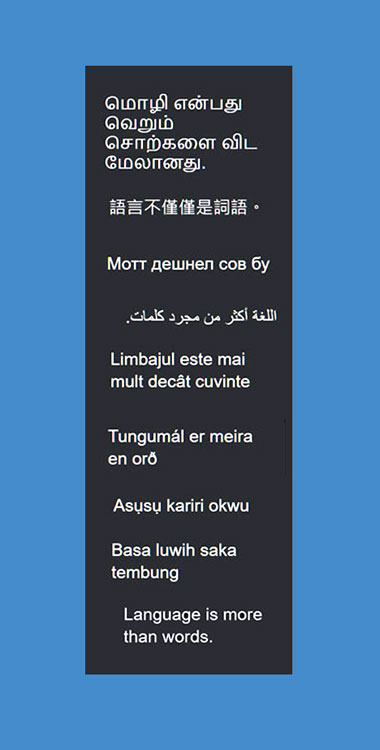
Language is more than vocabulary and grammar. It is memory. It is identity. It is the rhythm of lullabies sung by grandmothers, the cadence of prayers whispered in times of fear, and the vocabulary of hope spoken in moments of rebuilding. When people understand information in their own language, they are not just informed—they are empowered.
This is the quiet revolution led by Translators without Borders (TWB), now part of CLEAR Global, a global movement committed to ensuring that language is never a barrier to critical information, education, and opportunity.
At the heart of this movement is a simple but powerful dream: changing the world one translation at a time.
For nearly five years, a Tagalog linguist from the Philippines has been part of this mission. Her journey reflects gratitude, purpose, and a deep love for language. It is proof that even a single translator, working quietly behind a laptop screen, can impact thousands of lives across continents.
_______________
The Global Language Crisis: Why Translation Matters More Than Ever
According to UNESCO, more than 7,000 languages are spoken worldwide today. Yet research suggests that nearly half of these languages could disappear by the end of the century. When a language dies, we do not simply lose words—we lose stories, traditions, indigenous knowledge, and cultural identity.
Language loss is not merely a cultural issue; it is a humanitarian one. Studies show that people are far more likely to understand, trust, and act upon information delivered in their mother tongue.
● UNICEF reports that comprehension of health information can increase by up to 40% when delivered in local languages.
● Research from the World Literacy Foundation demonstrates that children who learn in their first language perform better academically and develop stronger cognitive foundations.
● The Endangered Languages Project emphasizes that documentation and active localization efforts are critical to preventing extinction and preserving cultural heritage.
In humanitarian crises, whether natural disasters, pandemics, or conflict, language access can mean the difference between safety and vulnerability. Without translation, life-saving information may never reach those who need it most.
This is where Translators without Borders steps in, not merely as a translation organization, but as a guardian of dignity and inclusion.
_______________
A Tagalog Linguist’s Calling
For one Tagalog linguist, joining TWB was never just professional engagement, it was a calling.
Gratitude, purpose, and a deep love for language, this is what working with Translators without Borders and CLEAR Global has given her.
Whenever her phone rings with a possible collaboration from TWB, she does not hesitate. She moves, straight to her laptop, ready to contribute however she can. Because this work is never just a task. It is a labor of love.
Through translation and localization in Tagalog, Filipino, and English, she has supported humanitarian, educational, and cultural advocacies across borders. She has translated health advisories during COVID-19. She has localized materials that help vulnerable families understand disaster preparedness protocols. She has worked on educational content that allows children to learn in a language that feels like home.
She often reflects, “I’m still learning. Still growing. Still a work in progress.” And yet she is deeply humbled—and proud—to be part of something bigger than herself.
_______________
Stories of Empowerment Through Language
Behind every translated document is a human story.
In a rural province in the Philippines, a mother once struggled to understand vaccination guidelines released only in English. When localized Tagalog materials became available through humanitarian networks, she finally understood when and where to bring her child. Later, she expressed gratitude to local volunteers: “Now I feel safe. Now I feel informed.”
In another instance, translated educational resources allowed students in underserved communities to access science and environmental materials from Climate Cardinals. Young learners who once felt disconnected from global climate conversations suddenly found themselves participating, reading, learning, and even contributing ideas.
Through collaborations supporting organizations like USAHello, refugees and immigrants received translated guidance about healthcare, employment, and legal processes. A Filipino migrant mother shared how reading instructions in Tagalog made her feel respected in a foreign land. “For the first time, I felt like someone considered my language important.”
The linguist has also supported cultural preservation initiatives like the Endangered Languages Project, contributing to documentation efforts that ensure minority dialects are not forgotten. Elders in small communities have expressed relief knowing their stories, songs, and oral histories are being preserved.
Through humanitarian collaborations connected to War Child – Netherlands and American Red Cross, translated materials have guided families through crises, helping them rebuild with clarity and confidence.
These are not abstract achievements. They are tangible reminders that language access changes lives.
_______________
Translation as Advocacy, Preservation, and Purpose
Language is not neutral. It carries worldview, emotion, and memory. Translating a story or a public health advisory is an act of advocacy. It says:
Your voice matters.
Your understanding matters.
Your culture matters.
The Tagalog linguist has translated children’s literature and stories—projects that may not seem urgent compared to disaster advisories but are equally transformative. She recalls working on a children’s short story celebrating the beauty of Philippine landscapes. Later, a young reader wrote that it made her feel proud of her heritage.
Poetry bridges emotion across cultures. Stories cultivate empathy. Educational materials unlock opportunity.
This is advocacy.
This is preservation.
This is purpose.
_______________
The Ripple Effect of Five Years of Service
Nearly five years of consistent contribution may seem modest in the timeline of global change, but impact is rarely measured in headlines. It is measured in ripples.
One translated health advisory may reach thousands.
One localized learning module may empower an entire classroom.
One preserved dialect may sustain generations of identity.
The linguist’s journey also reflects personal transformation. Working with TWB has expanded her cultural sensitivity, strengthened her technical skills, and deepened her gratitude. She credits the extraordinary team behind TWB and CLEAR Global, leaders who are catalysts of change, sustaining language access worldwide.
Their mentorship and trust remind her daily that this mission is collective. No translator works alone. Each project is a collaboration across continents, united by shared values of equity and inclusion.
_______________
Why Language Access Is a Global Development Priority
Search trends reveal increasing global interest in keywords like language preservation, localization for social impact, translation for humanitarian aid, and mother tongue education. This reflects a growing awareness that equitable communication is central to sustainable development goals.
Organizations working in global development now recognize that language access improves:
● Public health outcomes
● Educational attainment
● Civic participation
● Disaster response effectiveness
● Cultural preservation efforts
Language inclusion is not a luxury, it is infrastructure.
Without translation and localization, global initiatives risk excluding the very communities they aim to serve.
_______________
The Responsibility of Language Professionals
As languages disappear at alarming rates, linguists carry both privilege and responsibility. The privilege of mastering multiple languages. The responsibility of ensuring they live on.
Translation is not mechanical word substitution. It is cultural negotiation. It is contextual intelligence. It is empathy in written form.
The Tagalog linguist understands that every project contributes to a larger vision: a world where language is not a barrier but a bridge.
_______________
How You Can Help Empower Underserved Communities Through Localization
The mission of Translators without Borders demonstrates that anyone can contribute to language equity.
You can:
● Volunteer your language skills. If you are bilingual or multilingual, your fluency can become someone else’s access to healthcare, education, or justice.
● Support language preservation initiatives. Donate to organizations working to document endangered languages.
● Advocate for mother tongue education. Encourage schools and institutions to prioritize inclusive communication.
● Raise awareness. Share stories about how translation empowers communities.
Localization is not limited to professionals. It is a mindset, an awareness that communication must meet people where they are.
_______________
A Dream That Continues
The Tagalog linguist looks back on nearly five years with profound gratitude. Every collaboration has reinforced her belief that language shapes how generations understand the world.
She remains a student of her craft, still learning, still growing.
And she remains committed.
Because language lives when we choose to carry it forward.
The dream is simple:
A world where no child is excluded from education because of language.
A world where no mother is left confused during a health crisis.
A world where no culture fades into silence.
This dream is not naïve. It is actionable. It begins with one translation. One volunteer. One community empowered.
_______________
One Word Can Change Everything
Programs like Translators without Borders and CLEAR Global prove that translation is more than technical work, it is humanitarian action. It is cultural preservation. It is global solidarity.
For nearly five years, one Tagalog linguist has quietly contributed to this mission. Her journey reflects a truth we often overlook: meaningful change does not always arrive with applause. Sometimes it arrives in carefully chosen words, thoughtfully translated, reaching someone at exactly the moment they need clarity.
You can be part of this transformation.
Volunteer. Advocate. Support localization for underserved communities. Invest in language preservation.
Because every word carries power.
Every language carries history.
Every translation carries hope.
Change the world—one word, one story, one language at a time.