
Jhansi ‘Razor’ Rani had a voice that could cut through conference-room chatter the way a razor sliced through cheap dupatta silk—clean, fast, impossible to ignore. At thirty-four, she carried herself with the immovable certainty of a woman who had read enough Beauvoir and bell hooks to weaponise both in a single sentence. Her colleagues at DataMesh Solutions, fourth floor, Srinivasa Towers, had learned to recognise the signs—the slight lift of her angular jaw, the way her long fingers pressed flat against the laminate table, the darkening of her already coal-black eyes before she opened her mouth and made somebody’s afternoon considerably worse.
“Every single DV case—every damn one—it’s the husband,” she was saying, her kurta sleeves bunched past the elbows, chandbali earrings swaying with each emphatic tilt of her head. The conference room smelled of stale sambar from the catered lunch and synthetic jasmine air freshener that never quite masked it. “He’s the one with the fists, the money, the property papers. She’s got nothing. You can’t tell me that’s not a pattern.”
Ravi Babu, the team lead—a soft-bellied man in a too-tight company polo—shifted his weight from one chappalled foot to the other. He had made the tactical error of mentioning his cousin’s messy divorce during the tea break.
I just wanted to talk about the bloody alimony, yaar. Not get a Ted Talk.
He said nothing. Experience had taught him that engaging ‘Razor’ on gender politics was like stepping into Hussain Sagar during monsoon—you went in ankle-deep and came out neck-deep.
This was not limited to office arguments. Jhansi’s Instagram reels, filmed in her Ameerpet flat against a curated backdrop of bookshelves and a strategically placed Frida Kahlo print, had gathered forty-two thousand followers. Her essays in Feminism in Focus, a Telugu-English online magazine, carried titles like “Why the Husband Is Always Wrong” and “Patriarchy Does Not Clock Out.” She had spoken at Osmania University, at Lamakaan, at a women’s collective in Secunderabad where the audience clapped so hard the corrugated-tin roof rattled. Her thesis was blunt, repeatable, and delivered with the fervour of scripture—in any dispute between husband and wife, the man was the aggressor and the woman the victim. Always. No exceptions. Power differentials rendered nuance irrelevant.
Her friends—Bhavani, Swapna, a handful of women she had known since their Osmania University days—loved her fierceness even when they privately doubted its edges. Colleagues tolerated it. Men in her orbit learned to nod, or disappear.
***
That Friday evening, the air over Hyderabad hung thick as a damp blanket. Exhaust fumes, jasmine garlands from a roadside vendor, and the hot-metal stink of sun-baked auto-rickshaws competed in the usual olfactory assault along the Ameerpet-Punjagutta stretch. Jhansi drove her white Maruti Baleno with the discipline of a woman who had paid for her own lessons and never relied on a father or a husband to navigate for her—indicator used before every lane shift, speedometer at forty in a fifty zone, always driving on the left of the road.
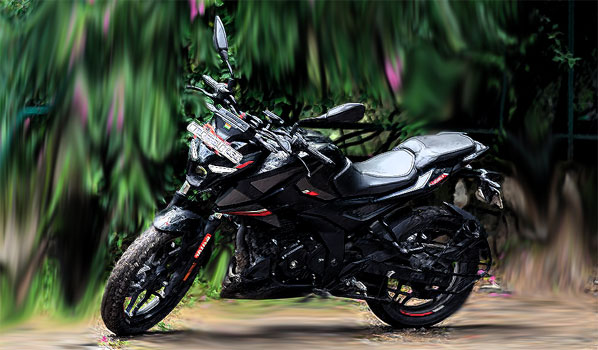
The motorcyclist materialised from a narrow galli on the left. A young man in a half-zipped jacket, no helmet, astride a dented Pulsar 150. He did not slow. He did not glance right. He cut a hard, arcing turn directly across Jhansi’s lane toward the opposite side of the road, and for one horrible half-second she saw his face—eyes blown wide, mouth a wet circle, the idiot-frozen expression of a man who had done something irreversible.
She stamped the brake pedal into the floor. Tyres screamed—a shredding skreeeee against asphalt that tore the evening apart—but momentum was a merciless bastard. The front-left bumper caught his rear wheel. The Pulsar spun. The rider launched off the seat like a sack of rice flung from a tempo, hit the tarmac shoulder-first with a dense, wet thukk, and skidded two metres in a smear of gravel and denim.
Jhansi pulled over. Her hands trembled against the steering wheel. The tea she had drunk an hour earlier rose in her throat, sour and threatening. She pushed the door open and stepped into a wall of heat, diesel fumes, and the rising wail of horns from cars stacking up behind the scene.
The motorcyclist—his name was Bachulal, twenty-three, delivery boy for a cloud kitchen in Begumpet—was sitting up by the time she reached him. Blood seeped from a gash above his left eyebrow and ran in a thin line past his ear. His jeans were shredded at the knee, exposing raw, gravel-studded flesh. His left arm hung at an angle that made Jhansi’s stomach lurch.
Saali—drove right into me, he thought, even as a dim, honest corridor of his brain registered that he had not checked the road before turning. Doesn’t matter. She’s in the car. I’m on the ground. That’s all anyone needs to see.
“Arre, you didn’t see me or what?!” he screamed, spittle and blood mixing at the corner of his mouth. “You’ve broken my arm, you pagal aurat!”
“I didn’t—you turned without looking!” Jhansi’s voice came out high, fractured. “You cut straight across—there wasn’t even a signal—you didn’t have a helmet—”
But the crowd had already decided.
They swarmed from tea stalls, footpaths, and parked autos—first four, then fifteen, then fifty. Uncles in old-fashioned trousers and sweat-darkened shirts. Young men in tight jeans who cracked their knuckles for emphasis. A couple of women with shopping bags who lingered at the periphery. The smell of paan spit and male sweat thickened around Jhansi until she could taste it on her tongue, alkaline and close.
A stocky man in a checked shirt appointed himself spokesman. He had a thick moustache, a belly that strained his belt buckle, and the self-granted authority of a man who had never once been asked to justify himself. Jhansi never learned his name.
Bike chhoti hai. Car badi hai. Bas, case khatam. He folded his arms across his chest.
“Doesn’t matter what happened, madam,” he announced to the crowd, loud enough to reach the back row. “Car hit the bike. She’s wrong.”
“That’s not how it works!” Jhansi’s voice cracked on the last word. “He cut across the lane—he was riding without a helmet—he didn’t signal—”
“Madam, he’s bleeding.” A younger man—gold chain, gel-slicked hair, the reek of cheap cologne—pointed lazily at Bachulal, who had wisely remained seated on the ground, groaning at well-timed intervals. “You’re standing, he’s not. Isn’t that enough?” His gaze drifted down Jhansi’s body and lingered a little too long at her hips. “Just pay up, baby. Don’t make this ugly.”
Sexy piece, though. Shame she’s in trouble. He chewed his lower lip and looked away only when an older man elbowed him.
From somewhere in the crowd, an auto driver muttered to his mate, “Ei, Venkatanna, you think CSK’s going to retain Dhoni this year or not?” The mate shrugged. A peanut vendor wove through the outer ring, calling “Palleelu, palleelu!” as though it were a fair.
Two traffic policemen—a sub-inspector and a constable—arrived on a white motorcycle, surveyed the growing jam, and blew their whistles with the vigour of men who understood exactly one aspect of their job. The sub-inspector—a gaunt fellow whose white shirt was sweat-soaked through to the vest—wandered over, glanced at Bachulal on the ground, at Jhansi’s crumpled bumper, and delivered his instant judgement.
“Madam, settle here itself. Otherwise FIR, court, maybe even attempted murder charge—your whole year’s gone. Minimum.”
I’m not taking an accident case in my shift. I don’t need that crap on my record. My shift ends in twenty minutes. Just clear the bloody road. He turned on his heel and went back to directing traffic.
The crowd’s demand crystallised like salt from evaporating water, settling at three lakh rupees. UPI transfer. Bachulal’s account. Now.
“Three lakhs?!” Jhansi’s whisper barely carried. “I don’t have—”
“Then we’ll call the station properly,” the stocky man said. His tone was that of a man offering a generous final concession. “Attempted murder case. Night in the police station. Your choice.”
No one—not a single person among those fifty-odd bodies pressing around her in the failing light—asked to examine the tyre marks, the angle of the galli, or the position of the Pulsar before impact. The calculus was absolute—bigger vehicle, bigger guilt. The motorcycle was smaller. Its rider was the victim. End of inquiry.
The symmetry pressed against Jhansi’s chest like a fist, but she did not have the luxury of recognising it. Not yet.
Her fingers trembled as she opened PhonePe. Her savings account read ₹2,12,400—every rupee she had set aside that year. Nine months of skipped Ohri’s brunches, declined Goa trips, office canteen lunches instead of Zomato orders.
She called Bhavani. Four rings.
“Bhavani, I need you to transfer ninety thousand to an account number I’m about to WhatsApp you. Right now. I’ll explain everything later.”
Silence on the line. Then Bhavani spoke, her voice low and careful. “Jhansi, what’s happened? You’re scaring me.”
Razor is finally neck-deep in something theory can’t fix, Bhavani thought, and hated herself instantly for thinking it.
“Just do it. Please.”
Bhavani did it.
At 7:38 PM, three lakh rupees—₹2,10,000 from Jhansi’s account, ₹90,000 from Bhavani’s—hit Bachulal’s bank balance. He checked his cracked phone screen, nodded once at the stocky man, and the crowd dissolved as efficiently as it had formed. Uncles drifted back to their tea. Young men lost interest. The peanut vendor had already moved on.
No one asked Jhansi if she was injured. No one glanced at her car.
She drove home at twenty kilometres an hour, hands clamped white on the steering wheel, jaw so tight her molars ached. In the basement parking of her Ameerpet apartment complex, under the cold, buzzing light of a single fluorescent tube light, she saw it. The entire front-left panel was buckled inward, paint scraped to bare metal in a long, ugly wound. The garage would quote fifteen thousand the next morning. She knew instinctively.
She did not eat. She sat on the edge of her bed in the dark, still in her kurta, road dust and diesel exhaust caught in the unwashed curtain of her hair, and stared at the transaction history on her phone until the screen timed out.
***
Monday morning. DataMesh Solutions. The same fourth-floor conference room, the same ghost of sambar, the same synthetic jasmine losing its war against recycled air.
Jhansi sat at her desk and said nothing.
Padma, in the adjacent cubicle, glanced over twice, then a third time. She had arrived prepared—her usual Monday mental shield raised against the inevitable patriarchy sermon.
She’ll be back to normal by Wednesday. She always bounces.
Wednesday came and went. Then a month. Then three.
Jhansi did not post a single reel. Her Feminism in Focus column went dark—no draft, no apology, no hiatus notice. Invitations from Lamakaan and the Secunderabad collective stacked up in her inbox, unopened. At the office, she attended standups, completed code reviews, replied to Slack messages with functional precision, and offered not one syllable about patriarchy, victimhood, or the automatic culpability of men.
Bhavani raised it once, over masala dosa at Chutneys in Banjara Hills. The air between them was thick with coconut chutney and filter coffee. Bhavani’s steel tumbler was still full. Jhansi’s was empty.
“Jhansi, you’ve gone completely quiet, re. You aren’t the ‘Razor’ we know.”
Jhansi looked at her across the steel plate. Her chandbalis did not swing. Her chin did not lift.
“I haven’t gone quiet,” she said. “I’ve just stopped being sure.”
She picked up the empty tumbler, turned it once in her ink-stained fingers, and set it back on the tray with a soft, final tink that neither of them acknowledged.