
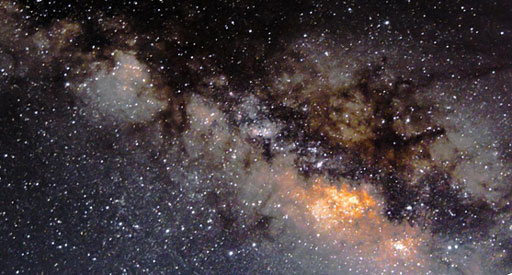
What if you could help scientists study whales, map the night sky, track disease outbreaks, or preserve endangered languages, all from your laptop or smartphone? What if your curiosity could contribute to real scientific discoveries, even if you weren’t trained as a scientist?
Welcome to the world of citizen science, where everyday people from around the globe participate in research projects alongside professionals. At the forefront of this movement is Zooniverse, the largest platform for online citizen science, empowering thousands of volunteers to contribute millions of research classifications that fuel breakthroughs and deepen understanding across disciplines.
This is a story about collective curiosity, global collaboration, and the simple yet transformative dream of changing the world one research classification at a time.
At its heart is a young professional whose passion for discovery led her to Zooniverse in June 2018. Since then, she has completed nearly 16,000 research classifications, a remarkable milestone that reflects not just commitment, but the human desire to be part of something bigger than ourselves. Her journey illustrates how citizen science doesn’t just advance research, it empowers people, enriches lives, and connects communities in profound ways.
_______________
The Rise of Citizen Science: A New Era in Research
Citizen science is not a new concept, but it has exploded in accessibility and impact over the last two decades. The term refers to public participation in scientific research, often through data collection, analysis, and classification. What once required fieldwork and lab access can now be done online by volunteers with curiosity and time to contribute.
Zooniverse, launched in 2007 at the University of Oxford and the Adler Planetarium, became the pioneering platform that democratized research participation. Today, it hosts over 150 active projects spanning astronomy, ecology, medicine, history, and more. The platform has engaged more than 2 million volunteers worldwide, generating data that would take professional researchers decades to process alone.
Citizen science empowers people by giving them a role in the knowledge-building process. It transforms science from an exclusive domain into a collaborative adventure. Research shows that citizen science not only accelerates discoveries but also increases scientific literacy and public engagement with research, making science more inclusive and accessible.
_______________
Why Zooniverse Works: Accessibility, Impact, and Collaboration
The power of Zooniverse lies in its simplicity and inclusivity:
● No prior scientific training required
● Projects are open to anyone with an internet connection
● Tasks are broken into clear, manageable classifications
● Volunteers see the real-world research their work supports
● Scientists get large-scale data processing that would otherwise be impossible
For example:
● In astronomy projects, volunteers help classify galaxies and identify celestial objects in telescope images.
● In ecology, citizen scientists tag wildlife in camera trap photos from conservation areas.
● In medicine, participants help analyze patterns in medical scans or genetic data.
● In environmental science, volunteers assist in mapping habitats and monitoring climate change indicators.
Each classification may seem small. But multiplied across thousands of participants, the collective impact becomes enormous.
_______________
An Empowering Journey: 16,000 Classifications and Counting
Since June 2018, a young professional discovered her passion for research through Zooniverse. What began as a curiosity soon became a purposeful habit. Clicking through images and datasets, she realized that her efforts, though modest individually, were part of a global scientific engine.
Now, with nearly 16,000 research classifications, she reflects on her journey with joy, humility, and gratitude.
“I never imagined that my curiosity could contribute to real science,” she shares. “Every click felt like a small step, but over time I began to understand that consistency builds impact.”
For her, Zooniverse became more than a platform, it became a community, a space where curiosity is celebrated, and where each classification contributes to the frontiers of knowledge.
She remembers one early project analyzing satellite images. Volunteers were identifying signs of deforestation in vulnerable regions. One day, she classified images showing forest loss over time. Later, she learned that the project’s data helped conservationists better understand where to focus protection efforts.
“That moment made me realize my work had real-world implications,” she says. “It wasn’t just data—it was people, ecosystems, and future generations.”
_______________
Real Stories, Real Impact
Across continents, Zooniverse volunteers have helped advance research in diverse fields:
Astronomy
Projects like Galaxy Zoo have involved volunteers in classifying galaxies based on shape and structure. Those classifications have led to dozens of published papers and even new astrophysical insights.
Ecology and Conservation
In projects like Snapshot Safari, volunteers tag wildlife in camera trap images, producing crucial biodiversity data that helps protect endangered species and understand ecosystem balance.
Medicine and Health
Volunteers have assisted in analyzing medical images or genetic patterns, supporting research that might one day lead to new treatments or diagnostic tools.
Cultural Preservation
Some projects involve transcribing historical documents or classifying language patterns, helping preserve cultural heritage and make archival materials more accessible.
What connects these stories is not only scientific advancement—it's community. Volunteers often share their experiences on forums, offering encouragement and celebrating milestones together. Gratitude is expressed not just toward researchers but toward fellow volunteers whose collective contributions make research possible.
One volunteer wrote, “I never thought classifying images could make me feel like a scientist. But here I am, learning and contributing every day.”
_______________
The Science of Collective Discovery
Citizen science is not anecdotal, it’s measurable. A 2020 study in Nature Communications found that citizen science projects, when well-organized and supported, can produce data comparable in quality to that collected by trained researchers. The study highlighted that volunteer contributions are not only abundant but scientifically valid.
Zooniverse’s datasets, contributed by thousands of volunteers, have led to numerous peer-reviewed scientific publications, something unimaginable before the era of digital citizen science.
Moreover, research indicates that participation in citizen science can increase scientific literacy, improve critical thinking, and deepen public understanding of research methods. This educational dimension makes platforms like Zooniverse transformative not only for research outcomes but for society’s relationship with science itself.
_______________
Gratitude and Global Collaboration
Across Zooniverse’s online communities, volunteers express gratitude for the opportunity to contribute. Many emphasize how empowering it feels to be part of real research, especially those without formal scientific training.
One volunteer from South America shared that participating in a climate-related project helped her understand ecosystem dynamics better, inspiring her to pursue environmental advocacy in her local community.
Another volunteer from Africa wrote about how classifying wildlife images connected her to conservation efforts she had only read about before. She said, “This platform made science feel reachable. It changed how I see my role in the world.”
These stories highlight an important truth: research becomes more impactful when it includes diverse voices and perspectives. Citizen science is not just about data, it’s about human connection, shared purpose, and collective learning.
_______________
How You Can Make a Difference
You may not wear a lab coat. You may not work in a research lab. But curiosity knows no barriers—and neither does citizen science.
Here’s how you can get involved and make a real impact:
Join a Zooniverse Project
Visit Zooniverse.org and choose a research project that resonates with your interests, whether it’s space, nature, history, health, or culture.
Contribute Regularly
Even a few classifications a week add up. Like the young professional who reached nearly 16,000 classifications, your consistent contributions help accelerate discoveries.
Engage with the Community
Participate in discussion forums. Share your insights. Learn from other volunteers. Citizen science thrives on collaboration.
Spread the Word
Tell friends, schools, or organizations about citizen science. Encourage others to participate and make research accessible to all.
Learn and Grow
Citizen science isn’t just contribution, it’s education. Each classification is an opportunity to learn about research methods, scientific concepts, and global challenges.
Every classification you make is a drop in a vast ocean of collective discovery. Over time, those drops become waves of insight, knowledge, and progress.
_______________
One Classification, Infinite Possibilities
The story of citizen science—and Zooniverse in particular—is ultimately a human story. It’s about people from different backgrounds, ages, and experiences converging for a common purpose: to learn, to discover, and to contribute meaningfully to the world.
The young professional who continues her passion with Zooniverse understands this deeply. Her journey from June 2018 to nearly 16,000 classifications reflects not just data points, but purpose, joy, humility, and service.
Her achievements remind us of something powerful: you don’t have to be a professional scientist to help advance science.
All you need is curiosity.
A willingness to participate.
And the courage to click.
Because every classification counts.
Every volunteer matters.
And together, we are reshaping what research looks like—one click at a time.
Join the citizen science movement today. Your classifications could be the next spark in a scientific discovery.