
Eva cradled the soft white orchid in her left palm as she scraped its pollen onto a toothpick with her other hand. The vanilla flowers were in season, and the farm owners were keen on preparing this year’s crop of beans before the wilt. A delicate fragrance hung in the air during the bloom but only pollinators like Eva ever got to experience the farm’s aroma firsthand. Eva wished she could bottle the perfume and wear it for her boyfriend, but the scent was as fleeting as the summer itself. The young woman closed her eyes and dreamt of rainbow snow cones as the heat washed over her. Like her father before her, Eva lived her life in her head. She would often get lost among the flowers as she pictured her future from afar. Eva loved getting lost. The daydreamer would follow the birds and imagine where they migrated from and create elaborate backstories for every flock.
Like most pollinators, Eva was not a homeowner. Hawaii was simply too expensive. She shared a small hovel with her father who spent more time fishing than working. Eva often wondered what her father was daydreaming about when he was out on the ocean. Did he pine for a better life like she did, or did he think of the past? Eva didn’t have a past – not yet. She was still young and had ample time to make her future. That’s what her father would say at least. Eva didn’t like the way her father reminisced about youth. It implied that youthfulness had an end. It implied finality – a day when dreams die.
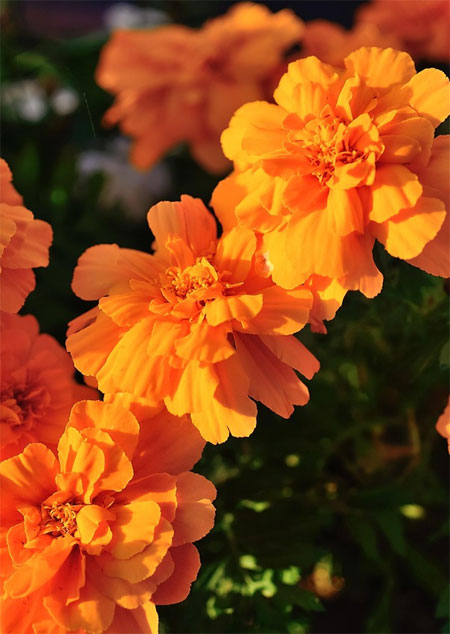
Eva tended to a small garden of flowers at home. Her father’s yard was speckled with anthuriums, gardenias, and plumeria of every color, but her favorite flower was the marigold that she kept in a pot by the bird fountain. Deep orange with yellow plumage, the marigold was the crown jewel of the garden. Each flower represented a dream: the anthuriums represented a house to call her own, and the gardenias represented marriage. But most importantly, each stalk of marigold stood for the children she’d yet to have. These flowers were more than just foliage. They were promises. Every day, Eva would water her children, and brush away the sand that had blown in. She would tend to broken stems and kill caterpillars indiscriminately. Eva loved her garden, and the garden flourished because of it.
Eva only snapped out of her reverie when she realized the garden shop was about to close. She clocked out at the farm, hopped into her father’s Dodge Dakota, and barreled down the highway. The young gardener held her hand out the window and felt the wind pass through her fingers. Eva was always checking the wind to see if a storm was coming. There was a coolness that crept into the air when rain was heading towards the island. A little bit of a nip, thought Eva. The Dodge pulled into the parking lot of the garden store. Eva tumbled out of the truck and meandered to the storefront. The sign read, closed for renovations. The fertilizer would have to wait. Not to be defeated so easily, Eva decided to walk to the beach instead. If she couldn’t get her garden supplies, she’d at least bring home a couple shells for her windowsill. Eva took off her shoes and stuck her toes into the cool sand. The amateur shell collector dredged the beach with her feet and kicked up the remnants of long forgotten sea life. That was until she stumbled upon a sea biscuit – a rare sight indeed. She rubbed the sandy token between her thumb and forefinger and dreamt of paying the ferryman with the bone white currency. Surely it was lucky. Eva brought home the skeletal trophy and tucked it away at the base of her marigold.
Eva’s boyfriend, Echo, visited the hovel with fertilizer in tow. He carried the bag on his shoulder with ease. Eva was enamored by Echo’s sturdy body and smooth-shaven face. The young woman showed her gratitude by making her boyfriend a giant root beer float. The ice cream came from the farm and had real vanilla bean mixed in. It was far better than the imitation stuff you find at the grocery store. Eva loved real things, and Echo was as real as it got.
With the cold front getting cooler, Eva was now certain that a storm was on its way. She could feel it on her fingertips. While most people would have left their garden to the gods, Eva took things into her own hands. Echo grabbed a tarp from the truck so the couple could build a makeshift awning for Eva’s flowers. The garden was more than fortified, but Eva didn’t take any chances. She dragged her prized marigold under a picnic table. Eva’s father nodded in agreement as his daughter made her arrangements. As a fisherman, he valued preparedness above all else.
Fat drops of water crashed against Eva’s window. She played with her shells like toy soldiers on the windowsill as she watched the onslaught pour. Coolness seeped from the glass and bit her nose, but she kept watching. Eva thought about the birds and wondered where they went when it rained. Were they tucked away under some bush somewhere or did they go home to a warm hearth and pea soup? The rain sputtered.
That night, Eva dreamt of bees and fertilizer. The drones built a hive of Babel that reached the heavens. Honey dripped from the wax lattice and formed a river at the base. At the entrance to the castle stood the ferryman. Stoic and brooding, the herald of death watched Eva with quiet eyes. She searched inside her coat for the sea biscuit but there was a hole in her pocket.
When Eva awoke, she felt hazy as if smoke had been blown over her in the night. She was wingless and numb. Eva hobbled out of bed and stretched her arms out in defiance. She pressed her forehead against her window and let the condensation wet her skin. Eva could see broken branches and overturned pots in the garden and grimaced. She threw on a robe and boots and hurried outside. Eva let out a sigh of relief when she saw her dreams standing tall and proud. The anthuriums looked strong, and so did the gardenias, but where were the marigold? Eva shuffled quickly to the picnic table and peered underneath. Her children were alive. The woman picked up the sea biscuit she had tucked away in her flowers and gave it a kiss.
Eva flew to work in her father’s truck and took a census of the damage along the way. Split trees hung over the road and leaves littered the ground like snow. She began picturing all the houses with torn shingles and leaky roofs. Her dream house would need a tarp like her garden, she thought. Eva dreamt of a home away from her father. The house had chocolate floors with iron filigree on stain glass windows. It was nestled in a bucolic neighborhood where hummingbirds had homes too and windchimes spoke magic. But most importantly, her house had a garden – a big one where marigolds dotted the landscape and children played. Eva came to and pulled into the farm. Her dreams would have to wait.
The manager shook his head in annoyance as Eva tumbled into work. She was late – again. The other pollinators were already out in the field. Eva put on her sunhat and dashed away toothpick in hand. Her coworkers rolled their eyes when she finally met them on the farmland. The pollinators were paid by acreage and Eva was the slowest. Most of them thought Eva was ill suited for labor and thought she should have been an ice cream girl at the agritourism center. What they didn’t know was that Eva had already failed as an ice cream girl – and as a cashier, and a tour guide. Her father attributed these failures to her overactive imagination. At the end of the day, Eva was greeted by her manager with a check and a pint of vanilla ice cream to go. She knew what this meant.
“I’m sorry to have to do this,” her manager sighed. “It’s just not working out. This just isn’t the place for tardiness or daydreaming. One of these days, you’ll have to grow up.”
Eva slunk back home defeated. Too embarrassed to tell her father, she went straight to her garden and hid. She sat at the picnic table and observed her flowers like a queen inspecting her knights. The gardenia and plumeria were as healthy as ever, and her prized marigold were shining. But the anthuriums … something was wrong with the anthuriums. The heart shaped flowers had fallen to the ground, and the plant was wilted. Eva got up to investigate further. The once green plant was brown with decay and the stems were spongey. Eva was devastated.
Uncertain of the cause, Eva dug up the plant with a trowel and threw away the corpse. She didn’t want whatever killed her flowers infecting the rest of the garden. Eva went inside and opened the pint of ice cream. She hadn’t planned on gorging the entire container in one sitting, but it felt like a necessity. Eva had lost her job and her anthuriums on the same day. She would never have a home for herself now, thought Eva. After hearing the news, her father baked her a frozen pizza and sat with her.
“Sometimes, things just aren’t meant to be,” he said in a consoling voice. “Life has a way of taking you in new directions when you least suspect it. Let this be an opportunity. I hated you working those long hours in the field anyway.”
The following afternoon Echo came over to console Eva. He placed his large hands on her thin shoulders and squeezed. Eva liked the way Echo knew what she wanted when she wanted it. Echo proposed going on a date night and Eva agreed. Echo never asked where she wanted to eat. He already knew the best spot. Tonight, they would have a Hawaiian fish bake. Eva put on her only good dress. It was the kind of dress that made Eva forget about her flowers and made Echo forget about good intentions. Eva stepped into Echo’s Toyota as if it was a carriage. She wondered if the SUV would turn into a pumpkin at the end of the night. Eva looked at her worn shoes and thought probably not. She would need to conscript a fairy god mother first – a good one.
At dinner, Echo recited all the interesting things that had happened to him that week. He had cut footage of a spinner dolphin and even a scarlet i’iwi. Eva loved the i’iwi; the bird’s funny hooked beak signaled it was a nectarivore, but she didn’t know which flowers it ate. Eva wondered if the flitting red fairy would ever visit a garden like hers. After dinner, the two walked along the shops and held each other’s hand. Echo stopped them outside a jewelry store.
“Let me get you a memento,” the young man said bravely.
Eva blushed and let Echo guide her into the shop. Not wanting to spend all of Echo’s money, Eva picked out a thin refurbished watch – the kind that didn’t announce itself in a room. Echo encouraged her to get something more valuable, but she thought the watch was gorgeous. Stainless steel with a sapphire lens, it was both practical and brilliant. Eva wished that night would never end.
The following day, Eva sat in her kitchen admiring the watch. Her father admired the watch too and suggested buying a case for it. Eva looked at her father’s weathered face and a sadness washed over her.
“Why didn’t you ever get remarried?” she asked.
Her father paused for a moment and searched for words.
“I only fell in love once,” he said finally. “But I’ve found meaning elsewhere. I have you and that’s all I need.”
Eva thought of her marigolds. She wished her father could find someone; to plant his own flowers. But he was old and enjoyed the company of his fishing boat more than people.
Echo arrived that afternoon with a fruit basket in tow. Eva thought it was odd, because she hated anything that touched cantaloupe. Surely Echo knew better. Eva plucked a strawberry from the bowl and gave it a smell; it was melon free. She placed the juicy red morsel in her mouth and felt the seeds with her tongue. It’s sour, she thought.
“We need to talk,” Echo said with a stern voice.
Eva grabbed Echo around the waist and buried her nose into his soft grey shirt. He smelled of detergent, lemon, and patchouli.
“What’s wrong?” Eva asked.
“I didn’t know how to tell you this earlier, but I got a job in LA,” Echo announced. “A good job.”
Eva’s ears rang as she processed the information.
“When will you be back?” she asked.
“I won’t,” he murmured. “It’s a permanent position.”
The once happy couple argued for hours as Eva vented. It was obvious now that the watch was not just a memento. It was a goodbye present. And it disgusted Eva. After Echo bid farewell, Eva hopped in the truck and drove straight to the jewelry store. Eva stumbled into the shop and immediately felt sick. The bright lights hurt her eyes, and the engagement rings seemed to taunt her.
“Can I return it?” she asked briskly.
“No return policy,” a woman said curtly.
The owner pointed at a sign that reiterated her message. Eva drove home slowly that night. She held her arm out the window as she’d always done and prayed for rain. But it was warm.
When she got home, Eva fell into her father’s arms and cried. It was the first time she had cried in front of her father since she was a little girl. She felt embarrassed.
“Let’s sit in your garden,” her father suggested.
Eva agreed so the two shuffled their way to the picnic table with ice cream in hand. The two admired her garden as the crickets chirped in the background. The plumeria were lovely, and the marigold were as bright as ever, but Eva caught something in the corner of her eye. The gardenias were spotted. Eva got up to inspect the once white flowers. The stems were twisted and the leaves were curling in. Eva reached out to touch her flowers, but then it happened – the gardenias began to twist and writhe as if possessed by the spirit of a snake.
“Do you see that?” Eva cried.
But it was already too late. The flowers had withered into a brown skeleton.
That night, Eva paced frantically around her bedroom. She didn’t understand what was happening to her garden. First her anthuriums had rotted and now her gardenias were in a twisted mess. Something sinister was to blame, she thought. After Eva’s feet began to hurt, she hurled herself onto the bed and let her overactive imagination take over. Perhaps there was some new disease plaguing Hawaii, or maybe someone had poisoned her plants in a desperate act of revenge. Eva racked her brain trying to remember if she had any enemies, but there were none. Her mind wandered back to her flowers.
“The marigolds!” Eva howled.
She immediately thought of all the children she had yet to have and quivered. Whatever was happening in her garden of dreams would come for her marigolds, she theorized.
The following morning, Eva awoke with a sense of danger. She could feel coldness on her fingertips as if a storm was coming. She threw on her oversized boots and made a beeline for her marigolds. Flickering black dots speckled her prized flowers. It was some kind of beetle. Eva took a deep breath and grabbed a bucket. She then knelt by her flowers and proceeded to pick off every bug with her fingers. Eva didn’t know where the beetles had come from but the why didn’t matter anymore. The only thing that mattered was saving her dream. Soon enough, the orange bucket contained so many beetles you couldn’t see the bottom of the pail – just the occasional flicker of plastic. They should be burned, she thought. But Echo had the fire starter kit. His absence cut deep inside her sternum.
Eva’s first mission after destroying the bugs was to replace the topsoil in the garden. She spent hours digging up dreams, bagging putrid old dirt, and repotting her children in fresh soil. When she was done, she kissed the sea biscuit and placed it back in its home by the marigold. Afterwards, Eva doused the garden in bug repellent – the most she’d ever used and far beyond the recommended amount. Her garden would be a graveyard for insects and creepy crawly things. Eva leaned back and admired her work as the acrid smell of bug spray permeated her clothes. That afternoon, Eva sat with her marigold. Each flower had a golden mane as if it was a lion basking in the sun. Eva felt like a lion too – a proud one that protects her cubs.
Throughout the evening, Eva would continue to check on the health of the marigolds. They seemed remarkably healthy for having had bugs crawl on them a few hours earlier. As if mania had taken hold of her, Eva would pace around the garden inspecting the plants with an intense fervor.
“Eva, what are you doing out here at this hour?” her father asked.
“Nothing,” she said like a child hiding a secret.
Eva couldn’t tell her father what was going through her mind. He wouldn’t believe it anyway. The young woman felt as if a curse had befallen her, but she knew she wasn’t crazy. Her dreams were being hunted.
“Go to bed,” her father commanded. “Your garden will be here when you get up.”
She didn’t believe him, but it was getting late, and she was tired from all the work she had done that day. Eva shuffled back to her room thinking of everything that could go wrong.
As Eva lay in bed, her mind twirled with images of twisted roots and blackened petals. She tried to hold one more thought but her heavy eyelids wouldn’t open. Soon enough, Eva found herself flying through air in a field of flowers – gorgeous flowers of pink, and blue, and yellow. Eva floated down to a river of honey. In front of her was the ferryman. He was twice her height and glided like a ghost. The entity held out his hand and Eva presented him with the sea biscuit.
“Good,” he said calmly.
The ferryman took Eva across the river and guided her to the hive of Babel. Eva peered through the door. Great arches and columns of wax held the interior together as worker bees flitted in and out through the windows.
“Do I have to go?” Eva asked nervously.
The ferryman nodded.
“I’m scared,” the girl said.
The ferryman took her hand and squeezed it firmly. And the two walked into the tower together.
Eva awoke drenched in sweat. A sharp pain stabbed her abdomen. Eva ripped off her sheets and found herself sitting in a pool of blood. Dark red discharge ran down her legs as if a butcher had carved her insides. Without putting on her boots, Eva ran to the garden and knelt by her marigolds. The flowers were torn, trampled, and beaten as if a beast had come in the night. Eva wept that morning.
The word grief didn’t even begin to touch what Eva was feeling. Eva lay in her bed under her comforter hiding from the world. Her flowers were dead, her dreams were dead, and the future seemed unclear. She listened to the sound of the fan churning. It was the sound of a butcher’s blade grinding meat. Eva felt ill. The injured woman crawled out of bed to fetch an aspirin from the kitchen. They were out. In anger, Eva stormed outside and grabbed the sea biscuit from her flowerpot and hurled it into the tree line. She wanted nothing to do with the ferryman. Her father watched solemnly as Eva stumbled back inside. Eva looked down and didn’t meet his eyes. Eva felt shame – a kind of shame you endure when you fail to protect something you love.
“Come here Eva,” her father said. “What is going through your mind right now?”
Eva looked at the floor.
“I don’t know,” she lied.
She knew exactly how she felt. She felt ashamed – ashamed that she lost her job, and ashamed that Echo left her. She felt ashamed for not knowing she was pregnant. And ashamed of losing her child.
“Then what do you need?” her father asked.
Eva thought about it but couldn’t answer. She didn’t want ice cream right now, and she didn’t want a hug. She didn’t want to be alone, but she also wanted to be in bed.
“I need my flowers back.”
Her father took a deep breath and rubbed his stumbly chin.
“This is a season Eva. Some flowers are annual, but others are perennial. They’ll be back, sometimes with scars. But they’ll be back. And if they don’t come back, you’ll have space for something new, something lasting,” her father said. “Let’s take a trip.”
That day, Eva’s father drove her to the garden store and bade her walk around.
“This is a store of dreams, dear. Find some you like and I’ll help you plant them this evening when it’s cool,” her father said gently.
Eva’s mind cleared as soon as she was amongst the flowers. An entire field of dreams ready to be rehomed. Eva walked the isles until she found flowers that spoke to her. Ginger, hibiscus, and naupaka; each one represents something new – a future. Eva dreamt of visiting Alaska to see the whales, writing a novel, and buying a fine dress. And now each one had a place in her garden.