I was born in Havana, Cuba, on March 17, 1957. Just before I reached the glorious age of two years, Castro and friends marched triumphant on the streets of my old Spanish city.
Ten years after the Cuban revolution, only weeks before Neal Armstrong’s epic stroll across the mysterious moon surface, my family took a less historic flight to our new homeland in North America.
I was lucky to have my mom and dad for most of my life. Papi lived past 98 years of age, and he loved me every day of those 98 years. Mima was almost 87 when she died just over a year after Papi, but she also loved me every day of her life. I’m still not sure how much of that love I deserved.
Many people I’ve known lost their parents at an early age... or even worse. They were far removed from their parents, for all the wrong reasons. Politics. Sexual orientation. Family dynamics. My sister and I didn’t have any of those problems. Our parents loved us without conditions. We didn’t have to embrace their points of view.
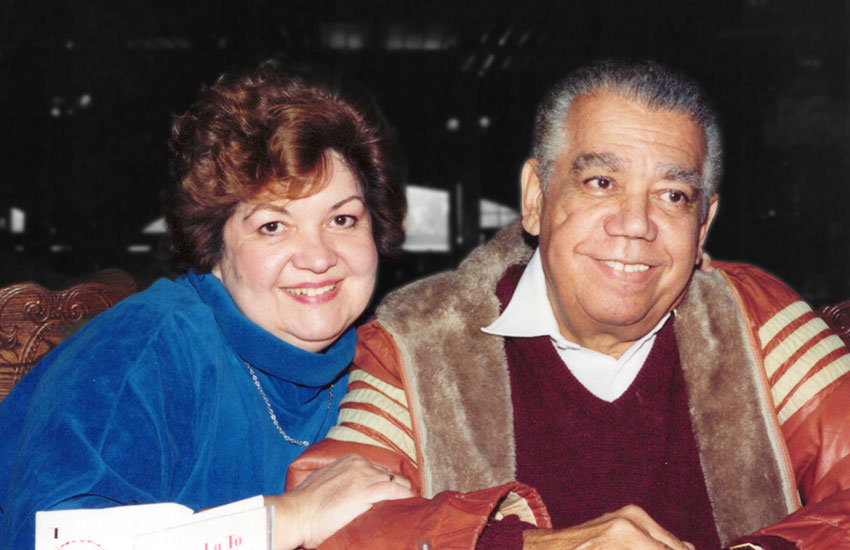
Mima and Papi after retirement. Papi's wearing my jacket.
Today I’m a writer, photo-illustrator and daydreamer. I’m retired from the San Francisco Human services Agency and reside in a rent-controlled one-bedroom Hobbit hole on the side of a windy and sunny hill in San Francisco’s Hobbiton District.
In my life I have worked as an artist, professional photographer, film processor, black and white printer, framing specialist... For a while I was a married man and then a divorced man, a wanna-be screen writer, a critic, a health department employee and then, suddenly, a Human Services Agency employee.
Today, as an old man, I try to atone for my young man sins by making the world a better place. I do this by being a good tipper (30% on food deliveries) and by hanging up rudely on poll takers and sales predators.
My first time voting... I recall driving my light blue VW Beatle to vote when President Carter appeared on the radio conceding the election. I was just pulling into the parking lot and felt devastated. I still had 15 minutes before the polls closed. I dragged myself and voted for John B. Anderson. If I’d had my radio off, I would have voted for Carter.
Some biographical facts…
I married less than a year after graduating from Venice High School in Los Angeles… I worked at Hughes Aircraft Company (HAC) for a few years but was never sold on America’s war factory. HAC seemed to sell weapons technology to anybody, and that never sat well with me.
Shortly after my 4-year marriage ended, I quit my job and went to work as a freelance photographer for several local magazines and newspapers. During this time, I also worked as a printer and film-processor. In time, while I was a student at Santa Monica College, I started writing articles for magazines such as Photo District News, Presentation Products, The Rangefinder and others.
Writing was fun and consuming, but I had to supplement my income with printing or photo jobs.
In the eighties, my photographic art could be found in galleries such as Cameravision, Canon Photo Gallery, LA Photography Center, La Grange Aux Crepes Photographic Gallery and others. At about that time my first (and only) attempts at poetry were published in Magical Blend and The Venice Beachhead, and I began to work as photographer for clients such as LA Business Journal, LA Reader, LA Weekly, LA West, Venice Family Clinic, Showcase West, Petersen’s Photographic, and others.
I learned that you could have a good resume and still earn just enough to be poor.
In 1988 I accidentally bumped into an intensive six-month training program at Communications Bridge Institute (CBI), taught by 18-year CBS veteran Chris Roper. The program covered every aspect of video and television production, including pre and post-production, scripting and budgeting, and brief internships in newsrooms at CBS, KTTV and others. I was awarded a certificate and a letter of appreciation from founder Brock Peters.
I used this experience to get magazine-writing gigs about new video innovations, such as the Video Toaster.
Throughout all this, I was an active member of the Cameravision (CV) board of directors. CV was an alternative space gallery with monthly exhibitions and artist lectures. I assisted with hanging exhibitions and served on committees that planned fundraising events and established adventurous exhibition concepts. I also eagerly participated in Exchange, a weekly meeting in which artists from any discipline could bring a piece of art current to them; a photo, a painting, a drawing... and it would be discussed by those present. This was one of the gallery’s most popular attractions. The meetings, held on Thursdays, started at 7pm and often lasted long past midnight.
I had a creatively and spiritually rich life. But I was still poor. I remember asking a friend to loan me 5 bucks so I could get gas to get to an assignment.
Another friend (not an artist) told me that I could make a couple of bucks by driving a cab, which I did for a while in West LA, Santa Monica and Malibu. I recall the friend who loaned me the 5 bucks making fun of the “big shot artist driving a cab…” FUCK YOU, BOB!
But that’s not why I stopped driving. I wrote an article for POST Magazine about Marina del Rey-based Color Systems Technology (CST), which was colorizing movies for Ted Turner. Eventually I went to work for them as a colorist.
Colorizing old movies was controversial for a while, but I liked this job. I enjoyed the technology and the process. And I could play music as loud as I wanted in the coloring rooms. I routinely blasted Tom Waits and The Beastie Boys, among many others.
Initially, the public misunderstood our work, they thought we were destroying old films, while, in fact, we were saving them. Before any colorizing was done, the films had to go through a rigorous restoration process. The color version became a new “instance” of the film.
When CST moved to San Diego, I didn’t go. I had things going on that I couldn’t just walk out on…
In 1989 I was a part of the Assemblage L.A. exhibition at the Brand Library Art Gallery in Glendale, with fellow artists Richard Littlefield, Clare Johnson, Maggie Brauner, Thelma Heavilin-Sanchez and others. I had seven pieces in the show, which marked my retirement from the exhibition circuit. I sold three of the pieces and burned the other four.
About two years later, in San Francisco, I took a straight job at the Department of Public Health (DPH), embraced computers and tried to go art-free. It was good to have enough steady money to get my own place. I felt like I was one of the good guys at DPH, and I liked the people I worked with as much as the very idea of public health.
In my second year at DPH I built the health department’s first web site using content from two immunization project newsletters. Dr. Gail Bolan, Director of the STD Training Unit, donated space on the UCSF server. As soon as the site went live, fireworks went off in my head. “Cyberspace is going to change my life,” I thought.
I tried to transfer to IT to work on a web site for DPH. But the time was not right, and there was the perception among some management types that the Internet was something cultish and dangerous. Some of them thought the same about me. I sure wasn’t what they expected.
In my own time, I began to assemble a timeline of Cuban history on AOL so that I could showcase the value of the Internet and win them over. But once I began to get emails thanking me for the timeline or asking questions about Martí and Maceo, I was hooked.
Working on the site gave me a sense of connection to the world that I’d never felt before. It was refreshing to find something so powerful not controlled by big business. Developing the web site soon became a labor of love. But this “love” required that I become a good researcher, a good historian and a good web developer, three distinct disciplines with nothing else in common other than being new to me.
Sometime in the middle of all this, Newsweek ran an article claiming that 95% of the pictures on the Internet were porn. Even though the article was successfully disputed within a week, my reputation with the ‘suits’ absorbed some of this notoriety. I stopped thinking about the DPH web site and embraced historyofcuba.com.
I read everything I could on Cuban history. The many used bookstores in the Bay Area, and the emergence of online book shopping, allowed me to build a modest library of Cuban history books. I also used the SF Public Library to search for old New York Times articles from the 19th century and the Interlibrary Loan System to borrow books and graduate papers from libraries throughout the country. I was a Cuban history junkie. And I liked it.
I picked up digital photography casually while working on brochures and pamphlets for DPH’s Immunization Section. Soon the art-bug re-infected me, and I began to explore photography again. There’d be no going back.
This time, I had a day job, so I didn’t care what anybody thought about my new stuff. I dug up old short stories and rewrote them. Then I wrote some new ones. I began to explore and reinvent my creative priorities. I made some new watercolors. I shaved most of my beard and cut most of my hair. It grew back. I had fun rediscovering my creative priorities.
During the first Obama Administration I went back to college. I attended the California Institute of Integral Studies (CIIS), in San Francisco, and completed my undergraduate work. I then attended Colorado Technical Institute (CTU) for a Master of Science in Management in Information Technology Management.
I briefly considered returning to CIIS for a 2nd Master or a Doctorate, which would have cost just over $62,000. I could safely count on about $2,000 in grants. Just a thought.
Returning to school in my fifties, I enjoyed the classes and the assignments and the collaborations. I would do more of it if it wasn’t so expensive. I’m still not sure that it helped me at the office.
Funding for my DPH job ended (due to political bullshit that may resurface when Newsome runs for President in ‘28) and I was forced to accept a job at the SF Human Services Agency. Among my signature work projects was a revolutionary web app that listed about 400 staff from Family & Children’s Services (FCS) and their contact information, including email, phone, division and office address.
The Department had never seen anything like this. You could contact any FCS staff from your work computer, your laptop or any smart phone. It replaced a 12-page printed directory and was color-coded with an instructions page.
Today, these apps are an everyday reality. At the time, I got little or no help from the IT Department. I wanted to know which phone and laptops would be issued to staff so I could tailor the user experience. No response. I was also never told of Network changes that affected the app when used in-house.
A few years later, during the pandemic, I worked from home updating the web app and redacting foster care case files requested by past clients or others.
By the time we were returning to work at the office, I realized it was time to go. I didn’t like reviewing the case histories of foster care children... After nearly 30 years of working for the City of San Francisco, it was time to retire and claim that famous AARP discount.
The first thing I did with my time was write a screenplay loosely based on my time at DPH during the heroin epidemic of 1998. It’s called ‘Healthworker.’ Believe it or not, it’s sort of a comedy with a health worker as the hero.
And that’s how I tend to think about my life up to now. It’s sort of a comedy. After a while, you just have to laugh.
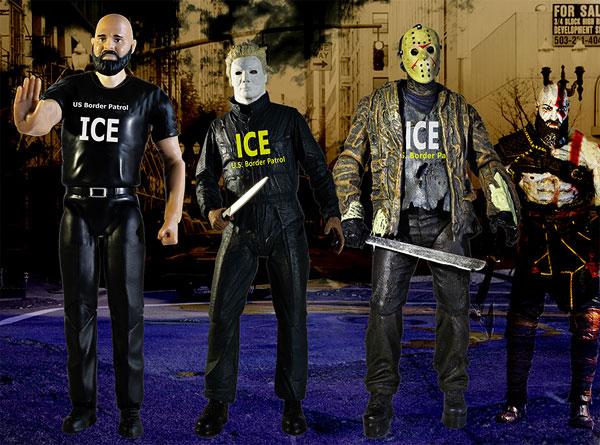
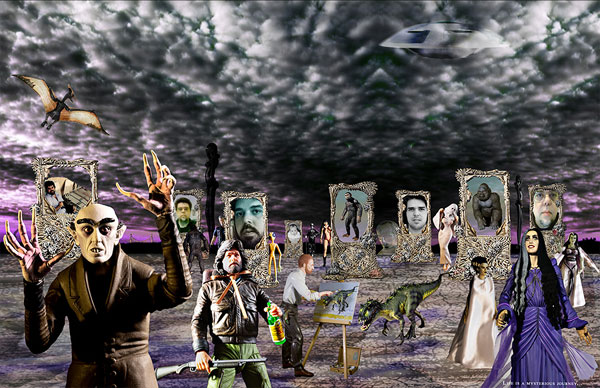
Today I continue to photograph toys and action figures with renewed vigor. They’re not toys, they’re actors! My images seek a deeper truth than mere reality.