
Chapter Six
In the event, nothing happened. Whether it was his native caution, or because someone braver than I told him the truth, Bataoudou pulled back from nationalizing the copper industry. A basic objection that had immediately come to mind during our discussion, but that I had been afraid to mention, concerned Ngongo’s neo-colonial relations with the French. Not that we had ever been a “kith and kin” colony, like some of our neighbors to the southeast. No, unlike the Brits, our nation’s French overlords had never constituted a large settler population. Mostly administrators, civil-service clerks and managers, or mining engineers and supervisors, their usual term of service in our “tropical hellhole” was three to five years. Even les gouverneurs generales had served only a single six-year term. And after 1960, only a few die-hards chose to linger on.
Yet wholesale ngoniennisation should not suggest that Independence brought a clean break. By no means! Among the multi-pronged arrangements we made with our erstwhile masters was an important mutual security treaty. Since Ngongo is landlocked, there was also an agreement about trans-shipping our copper ore to a port.
The security treaty permitted the French to maintain three forts, whose locations made them strategically important to both nations: near Mindouli, in the northeast, and one each in the southwest and northwest. This treaty, for which I had advocated in 1960, and to which I was a signatory, provided the French with staging posts for coming to the assistance of other nearby regimes with whom they, the French, also had mutual security pacts.
I keep mentioning le scissiparite’ of neighboring regimes. A leading cause of this condition was ethnic divisiveness, a problem now rearing its head in many African countries. For example, what lay in store for Nigeria, sub-Saharan Africa’s largest democracy? I could not see any future for that uneasy amalgam of former monarchies and decentralized polities. In fact, I gave them no more than three or four more years before ethnic animosities flared into civil war.19
The root problem, of course, could be laid at the doorstep of those European powers, including the French, who had divided us into entities for which the principal raison d’être was profit, rather than political viability. In the case of Ngongo, the largest groups of former adversaries were the Lugbara (my nationality, and Fons’s) and the Acholi (predominant, as I have said, among dissident groups).20
This brings me back to the benefits to Ngongo of the mutual defense treaty. Many of our dissidents belonged to nationalities involved in insurrections in neighboring countries, such as the Luo-speaking Alur, in the DRC and the Langi, in Uganda. Since new African nations were pledged to respect each other’s sovereignty, we (and the others) used the French as pats de chat [cats’ paws] to engage in hot pursuit of border-crossing dissidents, thereby depriving them of escape routes. Of course, I understood this dynamic intimately: I could not have done my job without the treaty.
An example will illustrate the point. Among our miners in Mindouli, as well as at other large sites, were foreign rebels who had found sanctuary from civil wars. Not only were these men safe in Ngongo, earning moneys that were used to fuel insurrections back home, they were a source of contagion. In fact, several of these foreigners had been instrumental in the 1961-62 agitation that led to the formation of Ngongo’s miners’ union. Furthermore, although I could not be sure of this, I suspected them of inflating the ranks of the CPLN. Thus, in addition to the “cats’ paw” utility of French soldiers, French intelligence was indispensable to my efforts to sniff out foreign troublemakers.
Our neo-colonial entanglements with France also extended to economic cooperation. Not only did we retain a small number of expatriate mining engineers, but our new nation inherited important transportation arrangements.
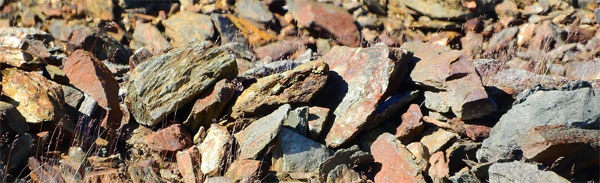
Before I describe these arrangements, I must describe what was done to the raw product before it even left the mines. The ore was first “beneficiated” (concentrated). Since Ngongo’s ore is primarily sulfide copper, it had first to be crushed and ground in order to “liberate” the valuable minerals, such as chalcopyrite, from the gangue, or waste minerals, such as quartz, feldspar, and mica.. It was then concentrated, by means of mineral flotation. (Are you surprised, Reader, that a Head of State would be familiar with such technical minutiae?)
Local trucking firms carried the concentrated ore to the railway depot in Fort Chaltin. There, in a smelting facility on the outskirts of the capital, the ore was processed into sheets of matte. These were then transshipped via the Benguela Railway to Lobito Bay, in Angola, sometimes called “the gateway of South-Central Africa.” Although the Railway was British-owned, the French were major shareholders, and when first constructed, the railway passed through the then-Belgian Congo. All of this meant that any thoughts of nationalization would be stymied by entanglements with our erstwhile rulers, as well as with those of our neighbors.
Since Portugal ruled Angola until 1975, and since, in 1968, the Angolans were embroiled in their own wars of liberation, if we had nationalized copper, a Kenyan option for rail trans-shipment would certainly have been available, and in the spirit of pan-Africanism, even preferable. But sending the ore to Dar es Salaam would have entailed a longer, more expensive passage to a very congested port, which would have meant delays, which would have meant lower profits, etc., etc.
So we were stuck with the Fort Chaltin-Lobito line, which meant that transportation arrangements were a second major obstacle to Batakoudou's notion.21 I still wonder if, on that morning of January 2, 1968, my enemy, the ministre des affaires economiques, eu les couilles [had the balls] to mention this obstacle.
The long and short of it was that, for whatever reason, Fons never nationalized copper. The possibility remained, of course, that his eventual successor would find ways to escape from our mutual dependency with the French. But, in the event, when I became that successor, the dependency problems persisted, exacerbated by new complications, making the decision whether to nationalize as difficult for me as it had been for Batakoudou. To cite one final argument, in 2000, Zambia ended their experiment with nationalization, re-privatizing the copper mines.
Before resuming my narrative, I wish to backtrack, and say a bit more about football, specifically about Fons’ and my divergent styles, both of which had made us schoolboy stars. If Fons’s game had had one glaring defect, it was that he lacked the capacity to see the entire field, which meant he was often unable to anticipate an opponent’s moves. The “blood brothers” incident may appear to contradict this judgment, but what it really showed was how Fons used his size, speed, and athleticism to compensate for his weakness in strategy.
Implicit in this analysis is my own profile as a footballer. Slightly slower and less athletic than Fons, I had what our coach once described as “an uncanny, Pele’-like knack of seeing the entire field,” which meant I always knew what was about to happen. The “blood brothers” collision was a notable exception: I failed to anticipate how quickly Fons would cover the distance between us. Of course, the reason there was so much ground for him to cover was my strategic superiority.
To take up the chronological narrative once again, I reluctantly return to family matters. By the end of the 1960’s, Sally and I had already suffered the loss of all three of our girls. As if that were not bad enough, our first, and eldest, son, Julius Robert, born in 1969, quickly showed signs of the instability that would ultimately lead to compete alienation between him and his father. As soon as he could walk, our Julius showed a propensity to wander into thick bush, and to the edges of deep ponds, and to lead other small children to these dangerous places. Once or twice, he even pushed a playmate into one of the ponds where, but for the sharp eyes of caretakers, the victim might have drowned.
As if that were not bad enough, when he was ten, at his coming-of-age ceremony (the Lugbara equivalent of my Ngbani mother’s ganza), Julius actually tried to unmask one of the dancers representing the ancestors. The initiates and their families were standing in a circle in front of the fetish objects —carvings adorned with ceremonial appurtenances— which were displayed on a long, low table in a clearing that fronted the fetish house. The boys, about six or seven of them, were clad only in loin cloths, and their faces were tired and downcast from the three-day ordeal.
Then, from the hut where they were costumed, the masqueraders danced into the clearing, accompanied by loud drums. Their number must have been six or seven (a similar number to that of the initiates). The “tallest” among the masqueraders, who wore an elaborate, towering headdress of wood, metal and raffia, was their leader.
As soon as the masqueraders had danced into the crowd, Julius’s facial expression became as demonically animated as a mad person’s. He leapt forward, screaming, “Uncle! Uncle!” And as he screamed, he reached up and attempted to dislodge the lead dancer’s headdress. There was barely time for myself and several other men to grasp the boy’s arms and pull him backwards. Had we hesitated for even a few moments, Julius would likely have committed a sacrilege that could have brought to the village a generation, or more, of ill luck.
In the course of the severe beating that I subsequently administered, the rude boy had the temerity to make this nonsensical objection: “Why are you beating me, father? I just wanted to see if the masquerader was your brother, Uncle Marcel. I bet it was him!” As you can imagine, this excuse caused me to redouble my efforts!
Two years after the birth of Julius, when our second son, Paul-Auguste, came into the world, he seemed to represent the gods’ intention to compensate us for his brother’s nature, and for the loss of our daughters. From his early years, Paul was a quiet, competent, sweet-natured child. When he reached school age, he demonstrated a high degree of tractability and a strong desire and capacity to learn. Later, I will say more, of course, about the two boys’ very different paths to adulthood.
Note 19: There is no way to tell whether FN’s reference to the Biafra War (1967-70) is insight or hindsight.
Note 20: See Note 5, supra.
Note 21: For African neocolonial economic and security agreements, as well as the tortuous path to Angolan Independence, see Gifford and Lewis (in the booklist, infra). This valuable collection of essays was published in the United States, in 1982. It is likely that FN read at least some of them, and he may even have been personally acquainted with one or two of the authors of the essays. I have used G & L to confirm what he says about colonial and neo-colonial relations between French colonies and the metropolis.
To be continued...
The Piker Press moderates all comments.
Click here for the commenting policy.