
Chapter Eight
In our nation, Ngongo, as in most of sub-Saharan Africa, “private” normally means “family.” In my case, the private sorrows that began in the 1960’s, with the death of all three of Sally’s and my daughters, and the onset of mental instability in our first-born son, reached a crescendo in 1985, with the assassination of her brother and my accession to the Presidency.
Beginning in that year, 1985, things were never the same between us. Most unfortunately, Sally had a weakness for gossip. She could never dismiss completely the rumors that I was behind the assassination. Julius, who was sixteen, by then, and a member of the youth branch of the CPLN at L’institut Pedagogique, poured fuel on these flames. Many a family dinner was ruined when the young man would explode in a fit of accusation.
“Everyone knows that you ordered the death of mon adro, cher Papa, [my uncle, Father, dear]” he would blurt out, with furious sarcasm. “Meurtrier!” [Murderer!]25 Sally would observe these tantrums in silence, fiddling nervously with her food, and eating almost nothing.
By now, Julius was un travail, personne inutile [a piece of work, a useless person]. The boy, who was already taller than me, possessed la puisssance cerebrale [the brain power] to surpass his father academically. Instead, he frittered away his time playing at radical politics, and chasing pretty girls. (He was known to have lured several innocents to CPLN rallies, where he would lead them into the bushes, for private “conferences.”) If the gods had intended Julius to be a curse on his parents, they could not have created him any differently.
Two years younger, Paul-Auguste, our “compensation,” was by then a sweet-natured plodder. By the onset of adolescence, Paul seemed destined for a career in which mediocrity would not matter. Like his mother, the boy was a zealous Catholic and, for a time, we thought he might become a priest.26
Was it the loss of our girls, the instability of our first-born, the mediocrity of our second, the rumors about her brother’s death, or some combination thereof, that alienated my dear Sarah from me? At any rate, in 1985, or shortly thereafter,, we ceased to live as man and wife. My position as Chief of State in a country where Catholicism, or at least its profession, was widespread, prevented us from legally separating.27 But we no longer shared a bed.
When the new situation proved irretrievable, I joined the legion of middle-aged skirt chasers; in other words, I became a philanderer. For her part, Sally tolerated my betrayals, because she could do nothing else. This pattern would persist until the second decade of the new century. At that point, as I entered my eighties, I found I could no longer spare the time and energy for continued sexual escapades. Around the same time, Viagra stopped working! I suspect that this pharmaceutical phenomenon causes many philanderers to desist!
Back to the salt mines —copper, really— which dominated my working hours, and leached into my sleep. (Am I the only sleeper in history recorded to have suffered decades of orange-tinged dreams?) What made copper not just a staff, but a cudgel, to me?
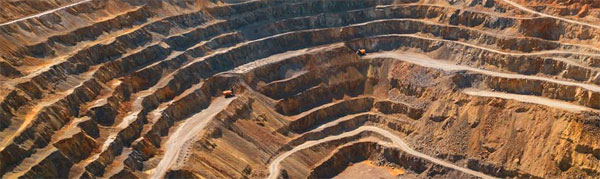
In Africa, most copper production comes from open-pit mining. Over time, a series of stepped benches is dug deeper and deeper into the earth. To dislodge the ore, boring machines drill holes in the hard rock of these benches, and explosives are inserted into the drill holes, in order to shatter the rock.
My recurring “copper dreams” found me falling from one stepped bench to another, unable to regain my footing, and constantly fearing that an explosion was about to blow me apart. As the dream progressed, instead of being blown to bits, I would experience increasing sensations of asphyxiation, until I awakened from my troubled sleep gasping for breath and soaked in perspiration. As you can imagine, after such dreams, I was not anxious to fall asleep again.
Sleeplessness may have been the least of my worries. As mentioned, the perpetrators of the 1985 coup shot not only Alphonse Batakoudou, but several of his sycophantic ministers, as well as three of the businessmen who had battened most egregiously on the country’s wealth. Soon after succeeding to the Presidency, however, I discovered an uncomfortable truth. Like my predecessor, I was hostage to fluctuations in the price of copper on world markets. In fact, Ngongo’s fortunes were affected much less by peculations, however large, than by global economics and finance.
By 1985, the days of premium prices for copper ore were temporarily on hold. (I can still hear Fons Batakoudou pleading for his life by citing this fact.) As early as the 1980’s, through the ’90’s, and on into the new century, many factors intermittently disrupted the copper market. Among these were recessions across the rich world and the invention of new techniques to streamline copper-intensive processes, further reducing the demand for ore.
Of course, it was now Festus Nkwema who was pleading for patience! The dogs yipping at my heels wore both imported suits and army uniforms. During the mid-1990’s —1994, or ’95, I think— a fact was brought to my attention that threatened to turn the yipping to snarling and biting. This same fact obliterated any remaining distinction between my public and private lives.
What happened involved a betrayal. A very bright young man whom I thought I could trust turned out to have been leading a double life. Still in his twenties, Andrew Ennyange was both Chief Accountant in our Bureau des Statistiques and un broyeur de chiffres [“numbers cruncher”] for the CPLN. His perfidy was not revealed until 2007.
In 1995 (I remember the exact year now!), M. Ennyange confronted me with a startling revelation. Among the three shareholders who were spared during the 1985 coup, at least one should not have been. Of course, this culprit was my own father! As Ennyange’s statistics purported to demonstrate, the reason he (my father) had escaped punishment was that he had been so clever at hiding millions of stolen CFA.
I can still recall my father’s response, in 1968, when I told him Batakoudou was considering nationalizing the mines. “Not a good idea, Festus! Do you think the French will go quietly? Oh, no! This plan of Fons’s will wind up crippling our economy. Not only that: the French will abrogate our mutual security agreements, which will leave us at the mercy of not just our own ’freedom fighters,’ but of hordes of foreign riff-raff.”28
What my father really meant was that he would not dream of trading his stolen millions for a salary of thousands. Also, as Ennyange’s statistics purported to reveal, Dad’s thievery had not ended when his son’s watch began. So what was I to do?
Since I already had a well-deserved reputation for draconian anti-corruption policies —scores had been shot, hundreds were serving prison terms that would end only when their lives did— and since I was also known as a crusader against nepotism, and since Andrew’s revelations were made in open session before the entire cabinet, I could hardly afford to spare my father. (I almost wrote, “my poor father.”) Even to mitigate his punishment on the grounds of advanced age (88) would not have satisfied the pack of enemies baying at my heels.
In other words, I was faced with a Hobson’s Choice of the highest magnitude. I recalled my Homer, in which Agamemnon had faced a kindred choice. (By now, the reader will have recognized the severity of my weaknesses not just for literary allusion, but for word play.) Unlike the Mycenaean king , however, when I had recourse to the gods, just this once, my prayers were answered. On the evening when he was served with an indictment on charges of gross financial malfeasance, signed by v.v. [yours truly], Dad suffered a fatal coronary infarction.29 To my lingering shame, my first reaction was, “Thank God! Now I don’t have to order his execution!”
It was not until twelve years later that I learned, from seized CPLN documents, that the charges against my father were a clever ploy to discredit me, and thereby to destabilize Ngongo. At that point, however, I checked Ennyange’s figures, and discovered that the fire he had tried to start was not without smoke. One-third of the moneys I inherited from my father had been pilfered from the people.
Did I return these moneys? Of course not! To have done so would have been to dishonor my parent’s memory! Successful governance rests upon the art of compromise. What I did do, both before and after 2007, was to engage in a program of land redistribution. In effect, I gave back much of what my father had stolen.30
Enough skipping ahead! By anticipating the events of 1995 and 2007, I have been putting the cart before the horse. I recall a joke made by one of my teachers at L’institut (the Latin master, I believe). He warned us not to “faire passer Descartes avant Horace” [put Descartes before Horace!]
Note 25: See e-mail of D.E. Dalvovo following Chapter Seven, supra.
Note 26: In the event, Paul-Auguste Nkwema became a civil servant, rising to the rank of greffier en chef [Chief Clerk], Ministre d’Agronomie. Ever loyal to his father, Paul-Auguste consistently defended FN and, soon after his death, wrote the Epilogue to these memoirs, for which see infra.
Note 27: 62% of Ngongo’s adult population profess to be Catholic.
Note 28: In listing his own objections to Batakoudou’s plan to nationalize the copper industry, FN apparently appropriated his father’s arguments. See Chapter Six, supra.
Note 29: Francois Leopold Nkwema, 1907-1995.
Note 30: The accountancy involved in this matter, whether Andrew Ennyange’s, FN’s, or some combination, is far too complex for me. It is, as people say, “above my pay grade.” BTW, Pierre Tshombe’s assertion (in Chapter Two, of Pierre Tshombe…) that the kabinda, or king of Ngongo’s Muninda people, was restored to power during the 1990’s, is unfounded. --RS
To be continued...
The Piker Press moderates all comments.
Click here for the commenting policy.