
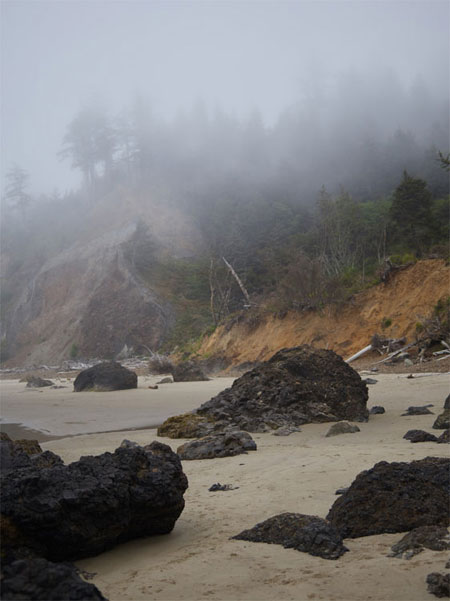
Autumn
Autumn announced itself early that year.
Not with storms — those would come later — but with a subtle cooling of the air, a thinning of the evening light, a faint brittleness in the grass beneath the clerk’s boots. The first leaves yellowed before their time. The fishermen muttered about strange currents. Even the priest’s sermons took on a sharper edge, as though the season itself had stiffened his resolve.
The clerk felt the change before he saw it.
She came less often now.
Not because she wished to — he could sense that — but because something in her world had shifted. When she did appear, she seemed… tauter, as though carrying a weight she could not set down. Her eyes lingered on the horizon more than on him. Her silences grew longer.
One evening, as they stood on the rocks watching the tide pull itself thin across the sand, he said, “You’re troubled.”
She did not answer at first. The wind lifted her hair, carrying the scent of salt and something colder beneath it.
“My time here is growing short,” she said finally.
He felt the words like a stone dropped into his chest. “Because of the priest?”
“Because of many things,” she said. “Your world is changing. Mine feels it.”
He frowned. “I don’t understand.”
“You will,” she said softly. “When the leaves fall.”
A gull cried overhead; the sound was thin and lonely. She turned toward him then, and for a moment he saw the strain in her face — not fear, exactly, but something close to sorrow.
“I should not have lingered in summer,” she said. “My clan watches me now.”
He swallowed. “Because of me.”
“Because of us,” she corrected gently.
The word struck him harder than he expected. Us. As though they were something joined, something real, something that existed beyond the boundaries of duty and chance.
He opened his mouth to speak, but she shook her head.
“Not here,” she murmured. “Not now.”
She stepped closer — not touching him, not daring to — but close enough that he could feel the coolness of her presence, the faint tremor beneath her composure.
“When autumn deepens,” she said, “I will come again. But it will be harder.”
“Harder how?”
Her gaze flicked toward the village, where the priest’s lantern glowed faintly in the gathering dusk.
“Your world is watching,” she said. “And mine is listening.”
A chill ran through him, though the evening was still warm.
She stepped back, the movement slow, reluctant. “When I return, it may be for the last time before winter.”
He felt the breath leave him. “Winter…”
Her expression softened — a fleeting, fragile thing. “Do not fear winter,” she said. “Fear what must be decided before it comes.”
And then she was gone — slipping into the water with barely a ripple, leaving him alone on the rocks as the first true breath of autumn wind swept across the shore.
He stood there long after the tide had turned, the sky darkening above him, the priest’s lantern flickering in the distance like a watchful eye.
The warmth of summer is gone.
And he knew — with a certainty that hollowed him — that whatever waited in autumn would not be gentle.
*
The Net Tightens
Autumn deepened quickly.
The mornings grew colder, the evenings shorter, and the priest’s sermons took on a harder edge. He spoke now of vigilance, of temptations that came “in fair forms,” of the dangers of old customs that “kept men chained to darkness.” He never named the clerk, but the man felt the weight of every word.
The villagers felt it, too.
They watched him more openly now. Not with hostility — not yet — but with a wary curiosity, as though he carried something fragile and dangerous in equal measure. A woman at the well paused mid‑conversation when he approached. A fisherman nodded politely but stepped aside, as though giving him room to pass was safer for them both.
Rumors had grown teeth.
“Voices on the rocks.”
“A woman walking the tide line.”
“A shadow slipping beneath the waves.”
“Someone meeting her.”
No one said his name.
They didn’t need to.
*
Her Return
She came again on a night when the wind carried the first bite of winter.
He found her standing at the edge of the rocks, her cloak — if it was a cloak — drawn tightly around her shoulders. She looked thinner somehow, or perhaps it was only the way the moonlight hollowed the shadows beneath her eyes.
“You’re late,” he said before he could stop himself.
She gave a faint, tired smile. “I am here.”
He stepped closer. “What’s happening?”
She didn’t answer at once. Instead, she looked out at the water, where the waves rolled in slow, heavy breaths.
“My clan is displeased,” she said at last. “They say I linger too long. That I cross too often. That I forget myself.”
He felt a coldness settle in his chest. “Because of me.”
“Because of many things,” she said. “But you are among them.”
He swallowed. “Do you regret coming?”
She turned to him then, and for a moment the strain on her face softened. “No.”
The word was quiet, but it carried weight.
“But it is dangerous now,” she added. “For both of us.”
He hesitated. “The villagers… they talk.”
“I know.”
“And the priest—”
“I know,” she said again, more softly.
He frowned. “How?”
She looked away. “Your world speaks loudly.”
A gust of wind swept across the rocks, carrying the scent of rain. She shivered — the first time he had ever seen her do so.
“You’re cold,” he said.
“It is not the cold that troubles me.”
He stepped closer, instinctively, but she lifted a hand — not to stop him, but to steady herself.
“When the leaves fall,” she said, “the pact weakens. The boundary thins. My clan grows watchful. Your priest grows bold. And the sea…” She trailed off, searching for words. “The sea grows restless.”
He felt the hairs on his arms rise.
“What does that mean?” He asked.
She shook her head. “Not yet.”
*
The First Real Danger
A sound broke the stillness — a sharp crack of stone underfoot.
They both turned.
Two figures stood at the top of the path, half‑hidden by the dark. Villagers. Men he knew. Men who should have been home by now.
They hadn’t seen her — not yet — but they had seen him.
“Go,” she whispered.
He didn’t move. “They’ll see you.”
“They must not.”
She stepped back toward the water, but not quickly — not with the effortless grace she had shown in summer. There was hesitation now, a tension in her movements, as though the act of crossing cost her something.
He took a step toward her. “When will I see you again?”
She paused; her feet were already in the surf.
“When the wind turns colder,” she said. “When the nights grow long.”
“And after that?”
Her expression flickered — sorrow, fear, longing, all in a heartbeat.
“After that,” she said, “everything changes.”
Then she slipped beneath the water, leaving only the faintest ripple behind.
The villagers reached him moments later, calling his name, asking what he was doing out so late, why he stood alone on the rocks. Their voices were friendly enough, but their eyes were sharp.
He answered as best he could.
But as he walked back toward the village with them, he felt the weight of her last words settle over him like the first frost of the season.
After that, everything changes.
*
The Last Warm Night
The last warm night of autumn came like a trick of the season — a brief, impossible softness before the cold set in for good. The day had been bitter, the wind sharp enough to chap the skin, but at dusk the air loosened, and the sky took on a strange, amber glow.
The clerk waited until the priest retired to his room, then slipped out, taking the narrow path behind the storehouse. He passed two older villagers sitting on overturned crates, mending nets by lantern light. They looked up as he passed.
“Out late again,” one murmured.
But the other — a grey‑haired woman with a face lined by years of salt and wind — gave him a small, knowing nod. Not accusatory. Not fearful. Something closer to recognition.
“Mind the tide,” she said quietly. “It’s a night for crossings.”
Her companion shot her a warning look, but she only shrugged. “Some things don’t change,” she said. “Not even when the Church says they should.”
The clerk walked on, heart beating faster.
He reached the shore just as the last light bled from the sky.
She was there.
But not as she had been in summer — not bright, not unburdened. She stood with her arms wrapped around herself, her hair blown wild by the wind, her gaze fixed on the horizon as though watching something approach.
When she turned to him, he saw the truth in her face.
She was afraid.
“You shouldn’t have come,” she said.
“You said you would return.”
“I did,” she murmured. “But it grows dangerous now.”
He stepped closer. “For you?”
“For both of us.”
The wind shifted, carrying the scent of rain and something colder beneath it — something metallic, like the breath before a storm.
She looked at him then, really looked, and he felt the world narrow to the space between them.
“I lingered too long in summer,” she said. “My clan sees it as a weakness. Your priest sees it as sin. And the sea…” She trailed off, shaking her head. “The sea grows restless.”
He swallowed. “Tell me what’s happening.”
“I cannot,” she said. “Not yet.”
He reached for her hand — not thinking, only needing to bridge the distance between them. She hesitated, then let him take it.
Her fingers were cold.
Not the cold of water.
The cold of something wearing thin.
“You’re fading,” he whispered.
She closed her eyes. “The boundary weakens in autumn. The pact frays. I am pulled in both directions.”
He tightened his grip. “Then stay.”
Her eyes opened — dark, luminous, aching.
“You know I cannot.”
He did. He had known it from the first moment she stepped from the water. But knowing did nothing to soften the blow.
A gust of wind swept across the rocks, scattering the first fallen leaves at their feet. She shivered — not from the cold, but from something deeper.
“They will come for me soon,” she said. “My clan. Your priest. The sea itself. All pulling in different ways.”
“And me?” He asked, barely able to force the words out.
She stepped closer, her breath brushing his cheek. “You are the only one who does not pull. You are the one I go toward.”
The world seemed to be still.
He lifted his hand to her face — slowly, giving her time to step back. She didn’t. His fingers brushed her cheek, and she leaned into the touch with a quiet, shuddering breath.
It was not a kiss.
Not yet.
But it was the moment before one — the breath held; the world suspended, the choice trembling between them.
Then she whispered, “Someone is watching.”
He froze.
She didn’t look toward the village. She didn’t need to. He felt it too — that prickle at the back of the neck, that sense of eyes in the dark.
He turned.
A lantern flickered on the path above the rocks.
Not the priest — the light was too unsteady — but one of the younger men from the village. A good man but easily swayed. He hesitated when he saw the clerk, then lifted the lantern higher, as though he was trying to see more.
The clerk’s breath caught.
But behind the young man, half‑hidden in the dark, stood the older woman from earlier — the one who had nodded to him. She touched the young man’s arm, murmured something he couldn’t hear, and gently steered him back toward the village.
The lantern dimmed.
The path was empty.
“They won’t speak of this,” she said softly. “Not all your people have forgotten.”
He exhaled shakily. “But the priest—”
“Will not be so easily turned,” she finished.
She stepped back toward the water. “This is the last time before winter.”
He felt the words like a blow. “When will I see you?”
“When the storm comes,” she said. “When the sea calls. When the choice must be made.”
“What choice?”
She shook her head. “You already know.”
He didn’t.
He did.
He couldn’t bear to name it.
She reached out — one last time — and touched his cheek with the back of her fingers.
A gesture of farewell.
A gesture of longing.
A gesture of something that could not survive the turning of the season.
Then she stepped into the water and was gone.
The wind rose.
The first true breath of winter curled at the edges of the night. And he knew — with a certainty that hollowed him — that the next time he saw her, everything would break.
Winter
Winter announced itself with a storm that seemed to rise from nowhere.
The day began cold but clear; the sky was hard and blue. By noon, the wind had turned, carrying with it the scent of distant rain. By mid‑afternoon, the clouds had thickened into a dark, roiling mass that swallowed the horizon. The fishermen pulled their boats ashore early, muttering about the unnatural speed of the change.
The clerk felt it before he saw it — a pressure in the air, a heaviness behind the ribs, as though the world was holding its breath.
He was in the scriptorium when the first thunder rolled across the bay. The priest looked up sharply from his sermon notes.
“Another storm,” he said. “Too many this year.”
The clerk murmured something noncommittal, but the priest’s gaze lingered on him, sharp and searching.
“You’ve been restless,” the priest said. “Distracted. I’ve seen it.”
“I’m well enough,” the clerk replied.
“Are you?” The priest stepped closer. “There are whispers again. Old women speaking of signs. Men claiming to hear voices on the wind. And always, always, your name somewhere beneath it.”
The clerk’s stomach tightened. “People talk.”
“They do,” the priest said. “And I listen.”
The words were soft, but they carried weight.
Before the clerk could answer, a violent gust of wind slammed against the shutters, rattling them in their frames. The priest crossed himself.
“This is no ordinary storm,” he said. “Something stirs in it.”
The clerk felt a chill that had nothing to do with the cold.
*
Sympathetic Voices
He left the rectory as soon as he could, stepping into the rising wind. The sky had darkened to the color of iron. The air tasted like salt and electricity.
He made his way toward the shore, though he knew he shouldn’t. Though he knew the priest watched him more closely now. Though he knew the villagers’ whispers had grown sharper.
Halfway down the path, he met the grey‑haired woman who had nodded to him in autumn. She was carrying a bundle of dried herbs; her cloak pulled tight against the wind.
“You feel it,” she said without preamble.
He swallowed. “The storm?”
“The turning,” she corrected. “The old pact shifting in its sleep.”
He stared at her. “You know.”
“I know enough,” she said. “My grandmother kept the rites. Her grandmother before her. Not all of us forget so easily.”
He felt something tighten in his throat. “The priest—”
“Knows nothing,” she said sharply. “Knows only fear. And fear makes men foolish.”
A gust of wind tore at her cloak. She leaned closer.
“If she comes tonight,” the woman said, “you must listen. The sea doesn’t call without reason.”
He opened his mouth to ask more, but she shook her head.
“No time,” she said. “Go.”
And she hurried up the path; herbs clutched to her chest, leaving him with more questions than answers.
To Be Continued...